3. The 9th Party Congress: Review of the 5-Year Plan and Outlook for New Diplomatic Line The 13th Plenary Meeting of the 8th Central Committee to prepare for the 9th Congress was held from December 9 to 11, 2025. At the meeting, while the justification for the direction of enhancing national defense capabilities, such as nuclear weapons and missiles, was emphasized, increased agricultural production was presented as an important task. This allows us to foresee that the official review of the 5-Year Plan to be announced at the 9th Party Congress will contain a dual evaluation. On one hand, citing missile advancement and the securing of submarine launch capabilities, the early completion of the "5-Year Plan for National Defense Science Development and Weapon System Development" will be propagandized as the greatest achievement. However, on the other hand, in the improvement of the people's economy—namely the fields of agriculture and local industrial development—they are in a situation where they have no choice but to admit to falling short of goals. Chairman Kim Jong Un bears the political burden of having to take responsibility for this failure in exchange for increasing the transparency of his governance style.
A political tool available to resolve this burden is a personnel reshuffle. At the 13th Plenary Meeting, it was decided to recall one member of the Party Central Committee and five alternate members, and "severe criticism" was levied regarding the "ideological viewpoints and inactive, irresponsible work attitudes" of some leading cadres. This heralds that the insufficient results of the 5-Year Plan will be substituted as a 'managerial issue' rather than a 'systemic failure' at the 9th Party Congress. It may not be a massive personnel reshuffle where major economic bureaucrats are purged or replaced en masse. However, an internal diagnosis that the self-reliance of the past 5 years showed limitations without external shocks would have been made. In the future, a process is needed to build justification for switching to a line centered on 'external trade' to replace the failed internal driving force, and for this, personnel reshuffles to pursue a new diplomatic strategy must inevitably continue even after the Party Congress.
It remains unknown whether North Korea will officially formalize a new diplomatic strategy. In the 13th Plenary Meeting, Chairman Kim Jong Un's perception of the current external environment and external strategies, including those toward the South and the U.S., were not mentioned. It is also unclear whether North Korea will codify the Hostile Two-State Theory regarding the South through amendments to the Party Rules.
What is certain is that at the 9th Party Congress, the immutable nuclear strategy will be adhered to as a principle. However, there is a possibility that the existing 'Nuclear Priority' will effectively be reconstructed into a diplomatic and security discourse in the form of a 'Nuclear-Based Pragmatic Strategy.' This is because the current Kim Jong Un regime is in a realistic condition where it must secure the minimum deterrence through nuclear weapons while stably securing the driving force for the fragile 5-Year Plan from the outside. Therefore, it is natural for North Korea's diplomatic moves to proceed in the direction of escaping the past yoke of "Denuclearization vs. Compensation" and constructing a new negotiation framework of "Management of Current Threats vs. Sanctions Relief." Whether this 'Transitional Diplomatic Strategy' will be declared depends on whether there are changes in the external relations environment around the time of the 9th Party Congress.
[Table 2] Comparison of Strategies: 8th WPK Congress vs. 9th WPK Congress (Outlook)
|
Category
|
8th Party Congress
(2021)
|
9th Party Congress
(Scheduled for 2026)
|
|
Key Tone
|
Isolationist
Self-Reliance
|
Nuclear-Based Pragmatic
Strategy
|
|
Economic Line
|
Strengthening Control
and Mobilizing Internal Resources
|
Expanding External
Trade and Pursuing Sanctions Relief
|
|
Nature of Nuclear
|
Security Means (Goal of
strengthening defense power)
|
Exchange Means (Bargaining
Chip / Parallel pursuit of Economy & Security)
|
|
U.S. Strategy
|
Preparing for Long-Term
War
|
Arms Reduction vs.
Sanctions Relief
|
|
Japan Strategy
|
Principled Criticism
and Exclusion
|
"Detour for U.S.
Approach, Cracking the ROK-US-Japan Alliance"
|
|
South Korea Strategy
|
Anti-Enemy Struggle
(Strained Phase)
|
Hostile Two States
(Complete Exclusion and Disregard)
|
4. Changes in External Environment and North Korea’s Diplomatic Options
The fact that the 13th Plenary Meeting, which heralded the 9th Party Congress, was conducted over a short period and refrained from publishing its contents likely stems from the judgment that the international order surrounding North Korea remains fluid. Above all, the resumption of North Korea-U.S. negotiations prior to the holding of the 9th Party Congress is opaque. Here, the end of the war in Ukraine could be an important turning point that shifts Pyongyang's gaze from Moscow to Washington. Of course, even if the war ends, a drastic 'de-Russification' phenomenon where North Korea severs ties with Russia will not occur. While wartime transactions of 'weapons-for-energy' will decrease, economic interests could be readjusted in the form of North Korea dispatching labor for Russia's post-war reconstruction projects. However, this does not guarantee revenue as high as artillery shell exports, and the security guarantee effect through troop deployment will also disappear.
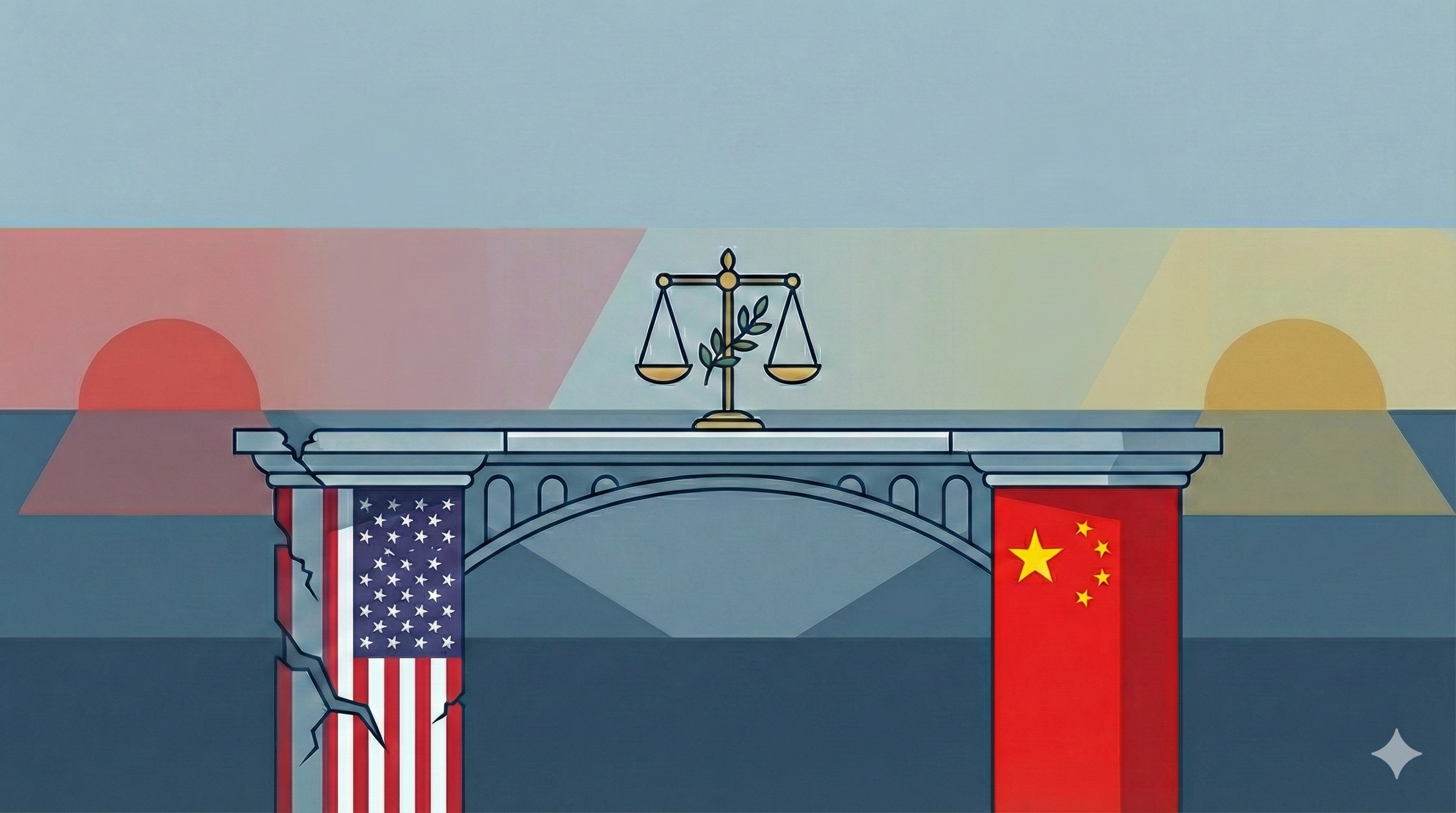
For North Korea, the fading presence of Russia invites the return of China. China's support will not replace the Russia special boom. However, unlike Russia, China's influence on North Korea is not temporary. The intensification of the U.S.-China confrontation in the Trump 2.0 era has already created a situation where North Korea must hold on to China even more. Especially at a time when strengthening bargaining power against the U.S. is necessary, China becomes a core diplomatic asset for North Korea. However, a dilemma exists here. While China will also embrace North Korea as a strategic asset to check the U.S., it is difficult for it to agree to North Korea's unlimited nuclear advancement. Nor can it stand by and watch North Korea reach a grand compromise with the U.S. while excluding China. North Korea must solve the complex equation of sophisticatedly managing these potential conflict factors with China while increasing its bargaining power against the U.S.
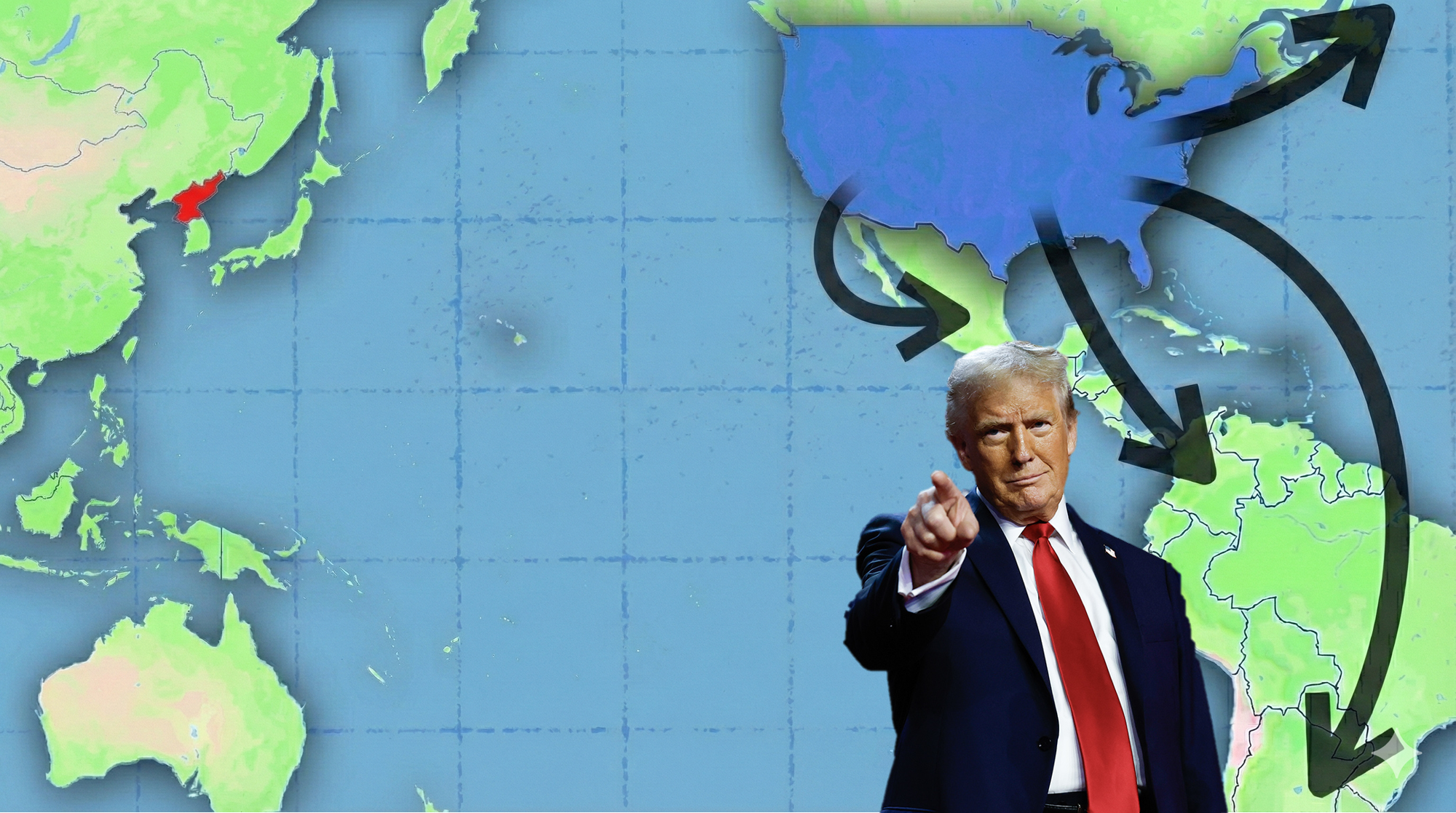
Nevertheless, the situation is such that Chairman Kim Jong Un cannot give up on approaching the U.S. The emergence of the second Trump administration is an opportunity from North Korea's perspective to erase the unjust demand for denuclearization and present the realistic goal of nuclear arms reduction. Meanwhile, if President Trump wants a compromise, North Korea discarding Intercontinental Ballistic Missiles (ICBMs) or some nuclear materials, or freezing nuclear weapons to make them a manageable threat, could come across as a much more attractive diplomatic victory. Carrots that Trump could offer in return—such as the conditional lifting of livelihood-related sanctions, the temporary suspension of ROK-US joint military exercises, and investment promises for North Korean tourism projects—have decisive significance for North Korea's economic plan and diplomatic strategy. In reality, if Trump and Kim Jong Un reach an agreement, it would be a hypocritical compromise where North Korea is not officially recognized as a nuclear state, but substantially, nuclear arms reduction negotiations proceed. This is because a crack in the nuclear non-proliferation regime must be avoided.
On the road to the resumption of North Korea-U.S. negotiations, Japan holds special significance. For North Korea, Japan is commonly understood as a payer of colonial reparations, but this is a story only possible when the normalization of North Korea-Japan relations becomes visible. At the current point, an approach to Japan becomes an effective card for North Korea to cause cracks in the ROK-US-Japan coordination. If North Korea-U.S. negotiations are delayed or deadlocked, Japan could become a channel for North Korea to approach the U.S. via a detour. In this process, they will seek to thoroughly exclude South Korea. If South Korea-Japan relations worsen, the effect doubles. On the other hand, for Japan, which is setting up a confrontation angle with China, the strategic value of North Korea is also rising. Prime Minister Sanae Takaichi envisions herself as Abe's successor. Therefore, efforts to resolve the abduction issue are directly linked to the legitimacy of the regime. Furthermore, in the process of the newly formed coalition government overcoming its limitations, a decision to visit Pyongyang becomes a powerful political temptation for Takaichi.
5. The 'Gyeongju Initiative' and Active Peaceful Coexistence
The possibility of North Korea concretizing the Hostile Two-State Theory into a constitutional and military reality and attempting a direct deal with the U.S. and Japan while excluding South Korea is, to the end, a worst-case scenario. However, we must pay attention to the fact that the potential danger facing South Korean diplomacy may not be temporary alienation. This is because a complex isolation, where South Korea's diplomatic space is structurally blocked as the strategic interests of surrounding countries interlock, could be brought about. Here, excessively emphasizing and appealing that we are a party to the Korean Peninsula issue could deepen isolation. In an asymmetric situation where North Korea possesses nuclear forces, following the passive balancing diplomacy of the past is also unrealistic. South Korea must possess the power of decision and must exercise it.
To this end, active intervention based on diplomatic resources (power) is needed, and through this, an active balance must be pursued. In this view, the agenda of introducing nuclear-powered submarines and securing nuclear potential, presented by President Lee Jae-myung at the Gyeongju APEC ROK-US Summit in November 2025, is highly symbolic. Regardless of the feasibility of realization, leading and sustaining the discussion on this agenda itself holds important meaning. Once the Trump administration proceeds with nuclear negotiations with North Korea, it operates as a realistic counter-logic to the security anxiety that South Korea will endure. Furthermore, beyond a relationship relying on U.S. security commitments, it signifies that South Korea will equip itself with independent asymmetric deterrence potential, becoming a message of a ROK-US relationship that evolves while complementing each other. The initiative South Korea demonstrated in Gyeongju also has significant implications for the future of the ROK-US alliance. The domestic consensus required for South Korea to accept an agreement between North Korea and the U.S. and to promote the next stage—the establishment of a peace regime—is only possible when such a vision is premised.
A specific example of active intervention could be policy toward Japan. Opposing or checking Prime Minister Takaichi's independent attempts to approach North Korea is ineffective. A paradigm shift is needed to use the progress of North Korea-Japan relations as an important means of South Korea's policy toward North Korea. Until now, joint response to North Korea's nuclear and missile threats has been the manual for ROK-US-Japan military defense cooperation. Within this framework, ROK-Japan cooperation has been taken for granted. Conversely, there is no regular discussion table assuming a phase of dialogue and negotiation with North Korea. The gap between South Korea's principle of being a concerned party and reality—the so-called 'Japan Passing'—reflects this reality. In this regard, the regularization of the ROK-Japan Vice-Ministerial Meeting agreed upon at the first summit between Lee Jae-myung and Ishiba in August 2025 was a good start. For the virtuous cycle of inter-Korean relations, North Korea-Japan relations, and North Korea-U.S. relations, South Korea's active intervention in North Korea-Japan relations is necessary at this point, and for this, a strategic dialogue channel between South Korea and Japan must be stably established.
South Korea's Lee Jae-myung administration aims for peaceful coexistence with North Korea. If this aim is to succeed the Kim Dae-jung administration's Engagement Policy, the first principle becomes "No Tolerance for Armed Provocations" by North Korea. It clarifies that engagement without the premise of superiority in power and deterrence becomes appeasement that tolerates changes to the status quo. Fundamentally, this connects with the implications of the Gyeongju Initiative. The peaceful two-state theory raised in some quarters can only be a peaceful and pragmatic approach based on realistic recognition when we are in a position of superior power. However, North Korea's Hostile Two-State Theory is not a declaration for coexistence, but a logic for severance and warfare based on nuclear force. Here, the 'State Recognition' card we offered for coexistence could paradoxically become a diplomatic indulgence allowing North Korea to deal directly with Washington and Tokyo. It is time for a more active approach of peaceful coexistence called "Peaceful Management of Special Relations" to secure international support without giving North Korea a justification to provoke. ■
References
1. Materials
Kim Jong Un. 2016. "Report on the Work of the Central Committee at the 7th Congress of the Workers' Party of Korea." Rodong Sinmun. May 8.
Kim Jong Un. 2021. "Report on the Work of the Central Committee at the 8th Congress of the Workers' Party of Korea." Rodong Sinmun. January 6.
Kim Jong Un. 2023. "Conclusion at the Enlarged Meeting of the 9th Plenary Meeting of the 8th Central Committee of the Workers' Party of Korea: On the Direction of Struggle for 2024." Rodong Sinmun.
Kim Jong Un. 2024. "Policy Speech at the 10th Session of the 14th Supreme People's Assembly of the Democratic People's Republic of Korea: On the Immediate Direction of Struggle for the Revival and Development of the Republic and the Promotion of the People's Welfare." Rodong Sinmun. January 16.
Korean Central News Agency. 2024. "Treaty on Comprehensive Strategic Partnership between the Democratic People's Republic of Korea and the Russian Federation." June 20.
2. Papers and Research Reports
Im Soo-ho. 2021. "Key Tone of North Korea's Economic Strategy After the 8th Party Congress and Implications." INSS Strategy Report, No. 115. Institute for National Security Strategy.
Hyun Seung-soo. 2023. "Evaluation and Outlook of the North Korea-Russia Summit." Online Series, 23-30. Korea Institute for National Unification.
Park Won-gon. 2025. "Trump Returns: The ROK-US Alliance and North Korean Denuclearization." Korea National Strategy, Vol. 10.
Bank of Korea. 2024. Results of Estimated Economic Growth Rate of North Korea in 2023. Seoul: Bank of Korea.
KOTRA. 2024. Trends in North Korea's Foreign Trade in 2023. Seoul: KOTRA.
Carlin, Robert L., and Hecker, Siegfried S. 2024. "Is Kim Jong Un Preparing for War?". 38 North (January 11, 2024).
Cha, Victor, and Kim, L. 2024. "The Russia-North Korea Axis: A New Strategic Threat in Asia". CSIS Beyond Parallel.
Park Jung-jin. 2023. "The Kim Jong Un Regime's Nuclear Strategy and Japan." In Nishino Junya, Reading the Turbulent Korean Peninsula: East Asia Institute Lectures. Keio University Press.
Hiraiwa Shunji. 2025. "The Kim Jong Un Regime's Strong Nation Policy and Diplomatic Deployment: Strengthening Defense Power and Restructuring the Security Environment." Kokusai Mondai (International Affairs), 726.
■ Jung-jin PARK is a Professor at the Department of International Relations, Tsuda University.
■ Translated and edited by Inhwan OH, EAI Senior Research Fellow; Sangjun LEE, EAI Research Associate
For inquiries: 02 2277 1683 (ext. 211) | leesj@eai.or.kr
|