Future of North Korea-Russia Ties Amid End-of-War Sentiments
- Video Commentary
- December 31, 2025
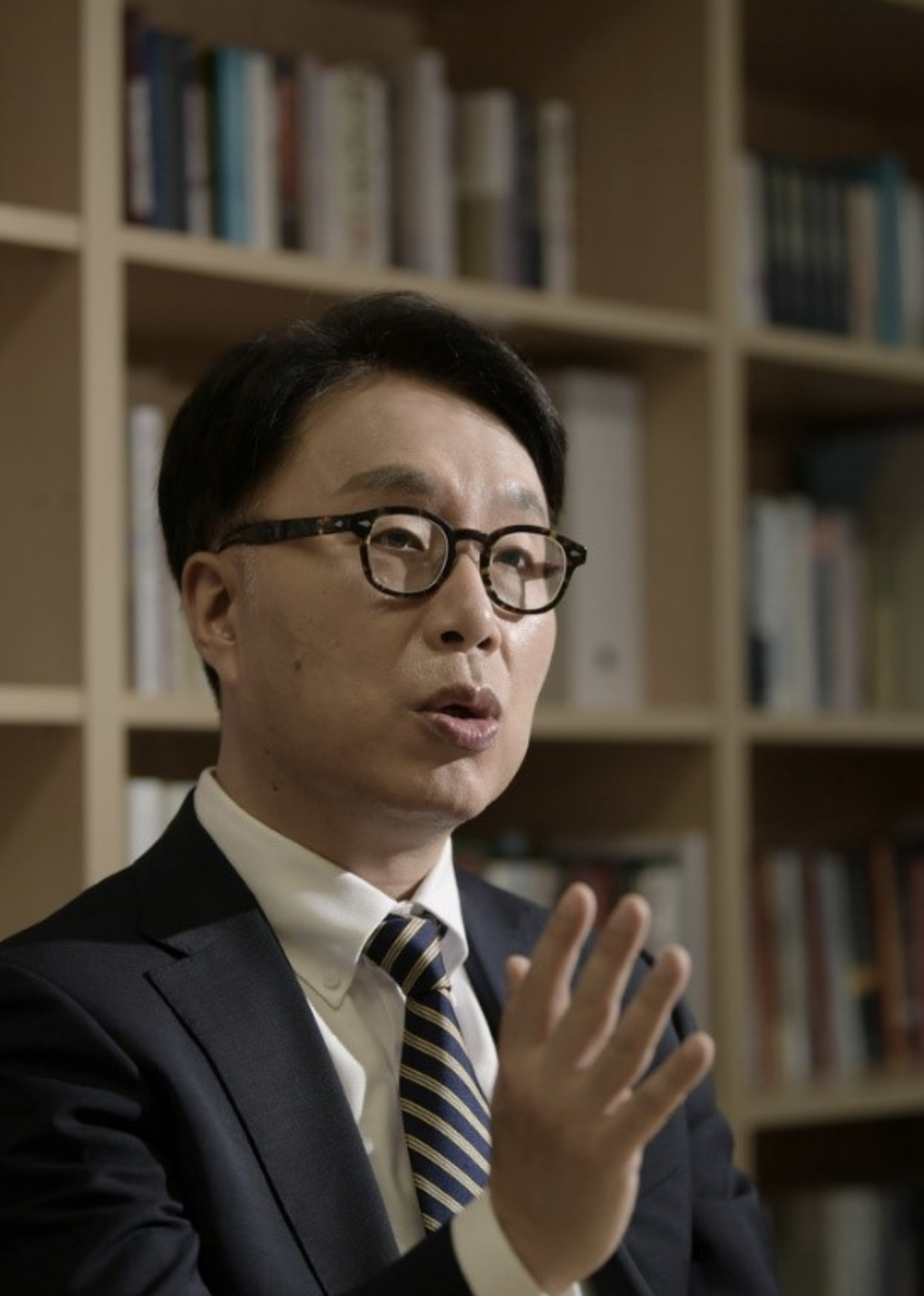
- Won Gon PARK
- Chair, EAI North Korea Studies Center
Professor, Ewha Womans University
Won Gon Park, Chair of the North Korea Research Center at EAI (and Professor at Ewha Womans University), analyzes the military and diplomatic benefits that the Russia-Ukraine war has provided for North Korea-Russia cooperation, along with the underlying structural constraints. Chair Park notes that despite achievements such as the accumulation of combat experience and the expansion of diplomatic maneuverability, North Korea-Russia cooperation is unlikely to deepen significantly even after the war, due to inherent economic limitations and restrictions on the transfer of sensitive technologies. Furthermore, he highlights the possibility that North Korea-Russia relations will be recalibrated in response to shifts in the international landscape during the end-of-war phase, emphasizing that a cautious approach is also necessary for the restoration of South Korea-Russia relations.
TRANSCRIPT (Subtitles)
Greetings, Today, I will talk about DPRK-Russia relations in the context of the Russia-Ukraine War. Today's date is November 26, 2025. As there is a possibility of changes by the time you watch this, I ask that you take that into consideration. Therefore, rather than dealing with current issues, I intend to provide analytical content regarding how the Russo-Ukraine War has influenced DPRK-Russia relations, the outlook for the future, and the limitations of the relationship between Russia and North Korea.
Throughout the last presidential election campaign, Trump stated that if he became president, the War would end in a single day. He said, "It could end in 24 hours," but even at this point, eight months later, the Russo-Ukraine War has not ended, whether by termination or armistice. However, recently, President Trump made 28 demands. He presented 28 items as a sort of peace plan, armistice plan, or war-ending plan; while there is significant backlash in Europe, the core of this plan is essentially freezing territory and implementing an immediate ceasefire, while suspending Ukraine's NATO membership. It is a conditional peace plan that offers partial sanctions relief for Russia. Broadly, about six proposals are being discussed. The first is the cessation of war, the second is territorial issues, the third is security guarantees, the fourth is troop reduction and demilitarization, the fifth is economic reconstruction, and the sixth is humanitarian measures; in total, it is known to comprise 28 items. There was a prevailing reputation that it largely accepted Russia's proposals as is. Negotiations between Ukraine and the United States regarding these 28 articles have reportedly resulted in a new peace plan of 19 articles so far. It is reported that several clauses entirely favorable to Russia have been adjusted therein. Looking at these discussions, I believe the possibility of either an end to the war or a ceasefire is increasingly rising. The main points I wish to address are: first, what benefits North Korea has gained through cooperation with Russia; second, how Russia's relationship with North Korea will evolve after the war ends; third, whether North Korea merely received benefits from Russia or if there was an equal exchange; and finally, what the limitations of Russia-North Korea cooperation are.
What North Korea Gained
First, I would like to discuss the benefits North Korea has received through the Russia-Ukraine War. First, it is clear that North Korea has accumulated combat experience for its weapon systems. Since the war began, in addition to artillery shells, North Korea has... (referring to the May 2019 start of development). Short-range ballistic missiles such as the KN-23 and KN-24, capable of carrying nuclear warheads and referred to as the North Korean version of the Iskander—development of which began in May 2019—have been used in the Russo-Ukraine theater. Initially, there was what is called circular error probable (CEP). It is said that the accuracy was vastly different. There were issues where they fell more than 2km away from the original target point or failed to launch properly, but it is known that technical limitations have been gradually reduced, thereby increasing accuracy. Of course, while statistics vary widely, synthesizing the overall evaluations, it appears clear that accuracy has definitely improved compared to before. To that extent, it can be seen that they have accumulated experience in field testing and operating weapon systems. Also, although the battlefield environment is clearly different from the Korean Peninsula, North Korea has gained actual combat experience in warfare utilizing drones. In the future, drones could be utilized in the battlefield environment of the Korean Peninsula as well, and it is clear that North Korea has secured practical experience in this regard. Second, it can be seen that they have secured strategic diplomatic assets. Diplomatically, it is true that North Korea is isolated. However, Russia, a permanent member of the UN Security Council and a nuclear weapon state officially recognized by the 1968 non-proliferation regime, has mitigated this isolation through close ties. The scene known to many, where President Xi Jinping was in the center with President Putin seated to the right during China's Victory Day celebration on September 3, was clearly seen and staged as North Korea breaking away from diplomatic isolation. Also, at the military parade for the 80th anniversary of the founding of the Workers' Party of Korea on October 10, the joint appearance of Premier Li Qiang and President Putin symbolically demonstrated that North Korea is no longer alone. Third, they attempted to neutralize sanctions through Russia. Unlike China, Russia—since it is a permanent member—agreed to the UN sanctions that were passed, but it has blatantly ignored them. The most famous case is what is called the Panel of Experts, isn't it? It is the Panel of Experts, called POE, and this Panel of Experts was dissolved through Russia's veto. It was a surprising event, and while many people thought it was a very difficult situation for things to go this far, it is clear that it happened. This panel was established in 2009 pursuant to UN Security Council Resolution 1874. As mentioned, Russia also agreed to that resolution. Composed of 8 independent experts, it monitors the implementation of sanctions related to North Korea's nuclear and missile development. Coincidentally, on March 28, 2024, Russia exercised its veto on the resolution to extend the Security Council panel, causing the panel to be dissolved; just the week before, I had met with the South Korean, Chinese, and Japanese panel members in a closed-door meeting and talked for quite a while. This is the benefit North Korea gained through cooperation with Russia during the Russo-Ukraine War.
Outlook on DPRK-Russia Relations After the War
From now on, I will carefully predict how DPRK-Russia relations will develop after the war ends, whether by treaty or armistice. First, I believe cooperation in the economic sector may expand partially. This is because if the war ends, Western sanctions imposed on Russia—particularly looking at what Trump is doing with Putin now—there is a possibility that US sanctions may be eased or partially lifted. If that happens, the scope of economic cooperation between Russia and North Korea could widen slightly. Of course, Russia is showing a form of completely ignoring sanctions against North Korea, but since Russia itself is under sanctions, there are limits to economic cooperation. Furthermore, if Russia begins full-scale post-war reconstruction, it is judged that there is room to utilize North Korean labor and for North Korea to expand economic opportunities through this. Nevertheless, because North Korea is under sanctions, it seems likely that such cooperation will remain in a fairly limited and unofficial form rather than becoming highly active. Also, the structure of exchanging shells or missiles for food and energy, which proceeded during the war, is judged to weaken, while the exchange of non-military resources such as coal, agricultural products, and marine products is likely to become more active. Some discuss the possibility of partially resuming the Rajin-Khasan project, but this only has meaning if China and South Korea participate, not just China, North Korea, and Russia. Therefore, even if North Korea and Russia partially resume the Rajin-Khasan project, I think it is highly likely to remain a small-scale symbolic project. I believe diplomatic cooperation may see an emphasis on symbolism while actual cooperation decreases. Of course, this is judged to differ clearly depending on the form in which the war ends, but generally speaking, once the war ends, Russia will begin adjusting diplomatic relations with the US and Western Europe, although it won't be easy.
This is because the necessity for support may decrease since they are no longer waging war. Also, I cannot completely rule out the possibility that Russia's active embrace of North Korea may diminish in consideration of international burdens. Speaking of the military sector, I believe the transfer of sensitive advanced military technology will remain restricted. There are no past cases of Russia providing sensitive military technology, and I think it will not be easy for various other reasons. Instead, cooperation in military operations, training, and low-risk areas may continue. For example, regarding the reconnaissance satellite project known to be a subject of cooperation—last year they launched once, and although Kim Jong-un ordered three to be put up last year, they could not launch after that one time. It is known that Russia is providing technical cooperation for that, and while it is unlikely they will give North Korea advanced technology related to reconnaissance satellites just because they are cooperating technically, there is a possibility they might transfer operational methods or dispatch North Korean personnel to Russian military satellite centers through such cooperation. Besides that, I think Russia could provide things like radar, electronic warfare jamming technology, and drone operation data. Also, I think Russia's policy toward North Korea may be influenced by the aspects of Sino-Russian relations after the war. Basically, China has publicly continued to show a negative stance on the war between Russia and Ukraine. They have continued to claim non-party non-interventionism, restricted unilateral support for North Korea, and it is judged that the Russo-Ukraine War had some influence on the poor relationship between North Korea and China. However, once the war ends, Russia will no longer be in a situation where it has to mind China as much as it did during the war. Naturally, because the war was the most important thing. However, in the post-war period, there is a possibility that they will join in more on the situation on the Korean Peninsula desired by China, for example, stability and management.
Next, in terms of internal politics, North Korea will declare victory regardless of the form in which the war ends. They will likely say this. "It is a victory for the anti-American, anti-Western camp," and will propagandize that "the independent sphere of influence centered on themselves has certainly defeated and repelled the hegemonic sphere centered on the United States," which North Korea frequently talks about these days. At the same time, they will try to significantly elevate their status as a strategic state that directly contributed to Russia's victory. Naturally, ahead of the 9th Party Congress, in a situation where they must wrap up the 8th Party Congress, if the armistice happens within this year, I think it is highly likely they will propagandize it as their greatest achievement. I also think there is a possibility they will produce a kind of "wishful narrative" that Russian support will expand due to the war victory. I will speak a bit about the influence of US-Russia relations. I think the influence of US-Russia relations could operate in a complex way. In the process of ending the war, President Trump's mediation continues anyway, so if the war ends, there is some possibility that U.S.-Russia relations will recover. Furthermore, I think the possibility of Russia giving North Korea sensitive technology capable of striking the US mainland is even lower. The possibility of a change in Russia's policy toward North Korea depending on future US-North Korea relations cannot be ruled out either. What I mean is, Trump keeps saying good things about Kim Jong-un and says he will meet him, but this could change. If he keeps suggesting a meeting but Kim Jong-un continues to refuse, or if Kim Jong-un conducts a 7th nuclear test or visualizes a threat toward the US mainland with ICBMs—having not fired one since late October last year—there is a non-zero possibility that Trump could return to the "Maximum Pressure Campaign" shown in 2017. If that happens, Russia's position would become complicated. If the US pressures North Korea, whether Russia can unconditionally take North Korea's side—I think Russia is likely to agonizing over that part as well. Moreover, looking at various aspects Trump has shown recently, he displays the appearance of great powers leading the world order through relationships with leaders of hostile and competing nations like China's Xi Jinping and Russia's Putin—akin to the Concert of Europe in the 19th and 20th centuries; thus, if the Russo-Ukraine war ends with US consent, Russia may show a more compliant attitude toward US requests, and I cannot rule out the possibility that Russia's unconditional support for North Korea could be suspended depending on US-North Korea relations.
I think it is necessary to view it with such possibilities open. Also, I think those interested have likely seen this report; it is a report that came out in September of this year. This is a report that calculated the profit and loss of North Korea and Russia in the Russo-Ukraine War. It is a report published by the Friedrich Naumann Foundation in Germany. The title of the report itself is "Unequal Partner Relationship." There is content that implies enough. The military support North Korea provided to Russia in 2023 is worth about 13.6 trillion Korean won in market value. This includes 122mm artillery shells, 152mm artillery shells, mortar shells, what North Korea calls multiple rocket launchers (MLRS), the KN-23 and 24 short-range ballistic missiles mentioned earlier, and the deployment of approximately 15,000 troops, calculated in monetary terms. However, the compensation received from Russia is said to be only about 1.65 trillion won, which is one-tenth of that level. Of course, it is a large amount of money for North Korea, but it is only about one-tenth compared to what they provided. It is judged that Russia did not provide the advanced military technology North Korea wanted, mainly providing over 1 million barrels of oil, a small number of air defense systems, about 200 million dollars annually in exchange for troop dispatch, and up to 700,000 tons of rice. If this report is correct, I think this constitutes a significantly asymmetric support relationship, an asymmetric exchange between North Korea and Russia. Of course, there are other evaluations regarding this. According to a report released by the Korea Institute for Defense Analyses (KIDA) in April 2025, the economic benefits North Korea gained through the Russo-Ukraine War are estimated at about 28.7 trillion won. Then, there is a difference of about two times compared to the Friedrich Naumann Foundation mentioned earlier. The reason for this difference is that there appears to be a difference in the estimates regarding the export volume of weapons and military supplies and technology transfer. In other words, the Naumann Foundation only tallied the compensation Russia actually provided to North Korea, while the KIDA statistics included potential economic benefits as well. That is why it is much larger.
Limitations of DPRK-Russia Relations
I would like to speak about the limitations of cooperation between Russia and North Korea. First, sanctions on North Korea, as I briefly mentioned earlier. I mentioned that the Panel of Experts on North Korea sanctions was abolished because Russia exercised significant influence in neutralizing sanctions on North Korea, but sanctions on North Korea are still valid. That sanctions are valid can be judged by looking at trade volume alone. This is because in 2016 and 2017, there were comprehensive sanctions on North Korea that primarily targeted five sectors of the North Korean economy. If so, to see whether those sanctions are effective or not, one must look at the period before 2016-2017 and the recent period of 2023-2025. In the middle, 2021-2022 was a special situation because North Korea closed its borders for a whopping three years due to COVID-19. To state the conclusion first, compared to the trade volume North Korea achieved in 2014 and 2016, the current level definitely does not reach that extent and remains at only about one-third or one-fourth of that level. Between 2014 and 2016, North Korea recorded a total annual trade volume of about 6 to 7.6 billion dollars, but looking at the current situation after 2022-2024, it remains at about one-third or one-fourth of the situation back then. This means that even if Russia provides support to North Korea and increases trade volume, the portion Russia accounts for is still only about 2%. If we look at the total as 100%, trade with China accounts for over 96-97% of the overall weight, and it appears that Russia's trade volume inevitably has limits. In other words, this means sanctions can be seen as still functioning. Economic cooperation with Russia is also inevitably limited. As mentioned, looking at the statistics, in 2014, Russia accounted for only about 1.2% of North Korea's foreign trade. Russia is North Korea's second-largest trading partner after China, but it only amounts to that much. Therefore, it can be seen that they rely on China for over 90% completely. Since the Russo-Ukraine War began, it has increased rapidly, but even based on 2023 standards, Russia's share of North Korea's total trade is only 1.5%.
What this means is that what North Korea needs are markets and capital, but Russia is not a country that can provide markets or capital to North Korea. In the case of export items as well, both Russia and North Korea have natural resources as their main export items. Therefore, they cannot satisfy the demand North Korea desires. For example, despite North Korea continuously emphasizing tourism business, the number of Russian tourists who visited North Korea last year was only 880. Just looking at that, I think the relationship between Russia and North Korea in economic terms is not significant. Regarding military technology transfer, I briefly mentioned it earlier, but this story also came out in a closed-door report to the Intelligence Committee of our National Assembly on September 11 this year. Around the time of the DPRK-Russia summit, our intelligence authorities assessed that North Korea was quite upset because it did not receive sufficient quid pro quo from Russia for troop dispatch and weapon support. They did not receive enough compensation. Probably one of the reasons North Korea thinks so is because, as briefly mentioned, they did not receive the transfer of advanced military technology; of course, some domestic media expressed suspicion that reactor module technology for a nuclear-powered strategic submarine, called SSBN, might have been partially transferred, but well. I am somewhat cautious about that part as well. It is clear that China also does not want such technology transfer. This is because as North Korea's ability to strike the US mainland improves with Russia's help, the justification for the Trump 2nd administration's nuclear modernization work—which includes the missile defense system called the Golden Dome and low-yield nukes—becomes further validated, and South Korea and Japan will also build strong defense systems; while the construction of such defense systems is said to be due to North Korea's threat, the original target could be China, so I think it is unlikely China would agree to that.
Outlook on ROK-Russia Relations
Finally, I will discuss the relationship between Russia and South Korea after the war ends. Russia is courting South Korea in various ways. Russia thinks it will be very difficult to take Europe as a partner once the war ends. If so, they might develop Siberia through the New Eastern Policy that Putin has already spoken of. It seems there is some possibility of taking South Korea as a partner, but a cautious approach is needed. Already, some say that if this happens, South Korea can help its economy through economic relations with Russia and influence North Korea through Russia, but I think how the war ends is very important. If it is a situation where Russia wins unilaterally and Ukraine effectively retreats in defeat, we need to be careful about cooperation with Russia, think well about the timing, and align the level and scope with liberal democratic countries, likely European countries, that think like us. Of course, Russia is not a direct threat to us as it is to European countries, but we need to keep pace with them to a certain level. Clearly, Russia's war in Ukraine is an imperialist war in which Russia invaded Ukraine; I use the expression "imperialist" because it is a form of attempting to seize territory using force against a neighboring sovereign state, so I think it is a clear imperialist war. It is a very illegal war, and moreover, the fact that a permanent member of the UN Security Council did it is an act that shakes the foundation of the international order that has persisted since 1945; therefore, if the war ends in such a way, what is more important to us is security—in this situation where we are under North Korea's nuclear threat, I think we clearly need to reflect basic norms and principles of the international community and goals for peace in our policy within a larger framework. Today, I have shared my own analysis regarding the Russo-Ukraine War, where talk of ending the war is becoming serious, and how it is linked to North Korea. Although I hope the Russo-Ukraine War ends quickly so that further great sacrifice ceases, because the form of that end also has very important implications for the future international order, I also have a personal wish that it does not end in a way that implies such an imperialist war was victorious. Thank you for watching.
■ Won Gon PARK is the Chair of EAI Center for North Korea Studies and a Professor of North Korean Studies at Ewha Womans University.
■ Translated and edited by: Sangjun LEE, EAI Research Associate
For inquiries: 02 2277 1683 (ext. 211) | leesj@eai.or.kr