■ See Korean Version on EAI Website
1. Introduction
The ‘5-Year Plan for National Economic Development’ (hereinafter ‘5-Year Plan’) presented at the 8th Party Congress in 2021 was announced in an environment completely different from that of the ‘5-Year Strategy for National Economic Development’ (hereinafter ‘5-Year Strategy’) of the 7th Party Congress five years prior.
When the ‘5-Year Strategy’ was announced in 2016, the Rodong Sinmun described it as a “brilliant blueprint to hasten the final victory of our revolution,” indicating it was an ambitious growth strategy (Lee, 2021). The strategy at that time emphasized large-scale investment in heavy and chemical industries. In terms of economic policy, it aimed for the full establishment of ‘Our Style of Economic Management Method,’ which granted a certain level of management autonomy to enterprises and cooperative farms. Externally, it was accompanied by a strategy aimed at attracting foreign capital, centered on over 20 special economic zones. This policy direction can be seen as having been backed by the relatively favorable economic situation during the first half of the Kim Jong Un regime (2012–2016), driven by expanded marketization and increased trade (Hong & Kim, 2021).
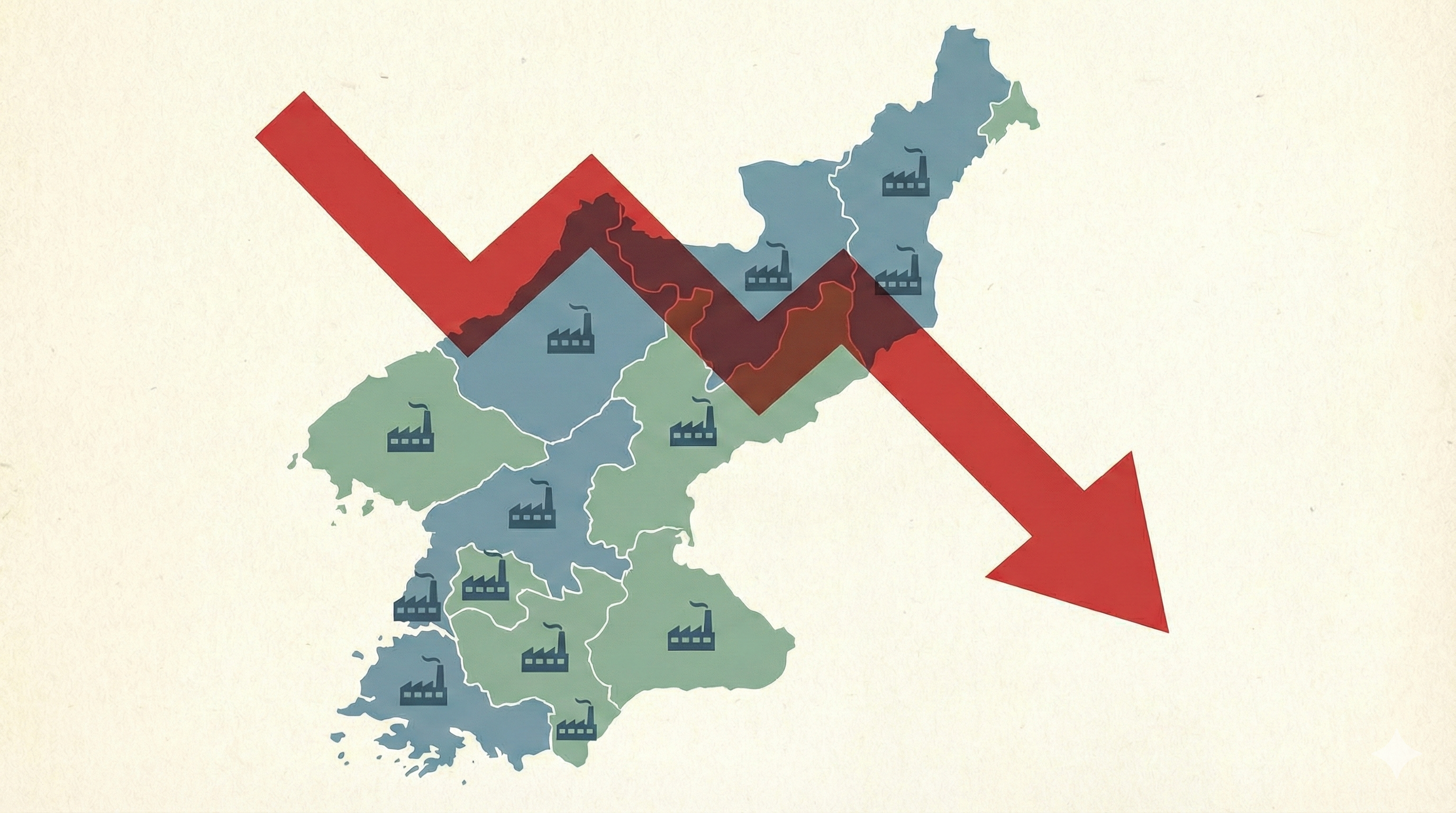
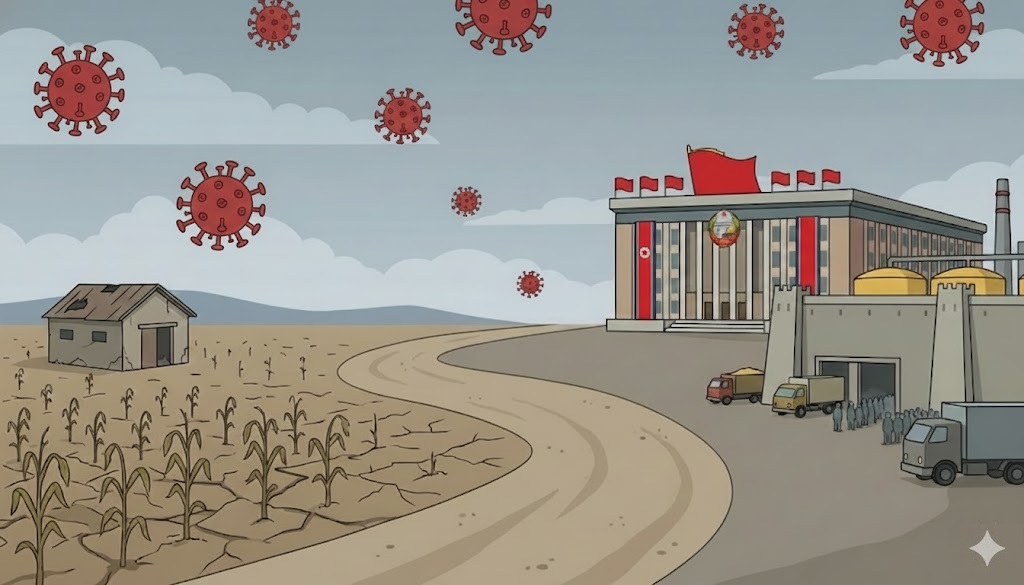
However, following the presentation of the ‘5-Year Strategy,’ North Korea’s internal and external environments deteriorated rapidly. In response to consecutive nuclear and missile tests in 2016 and 2017, the UN Security Council introduced high-intensity economic sanctions, the effects of which began to appear in earnest starting in 2017. Attempts were made to ease sanctions through Inter-Korean and North Korea-US summits, but these efforts collapsed with the breakdown of the Hanoi Summit in 2019. Subsequently, with the unprecedented border closure implemented due to the COVID-19 pandemic starting in 2020, the North Korean economy entered a phase of severe stagnation comparable to the past the ‘Arduous March.’ of the late 1990s.
As shown in Table 1, the economic situation at the time of the ‘5-Year Strategy’ announcement contrasts sharply with that of the ‘5-Year Plan’ announcement. In the four years immediately preceding the announcement of the ‘5-Year Plan,’ the average trade volume declined to approximately $3.1 billion, about half the level of the previous period, and the economic growth rate shifted from positive to -2.9%. Furthermore, the growth rate of government budget revenue also decreased by 1.6 percentage points, indicating a worsening of national fiscal conditions. Consequently, the role of the ‘5-Year Plan’ was effectively narrowed to a strategy of ‘maintenance and reinforcement,’ centered on self-reliance (Jaryokgaengsaeng) and self-sufficiency.
[Table 1] Average of Major Economic Indicators for the 4 Years Prior to the Announcement of the 5-Year Plan and 5-Year Strategy
|
|
Four-Year Average before the Announcement of
the 5-Year Strategy (2016)
|
Four-Year Average before the Announcement of
the Five-Year Plan (2021)
|
|
Trade Volume (Million USD)
|
7,004
|
3,125
|
|
Economic Growth Rate (%)
|
0.6
|
-2.9
|
|
Government Budget Revenue Growth Rate (%)
|
5.2
|
3.6
|
Source: Trade volume and economic growth rate from Statistics Korea (North Korea Statistics); Budget revenue from Lee Jong-kyu (2022).
This study aims to evaluate the progression of the ‘5-Year Plan,’ which was pursued under such internal and external constraints, focusing on the discussions of the Plenary Meetings of the Central Committee of the Workers' Party of Korea (WPK). In the Kim Jong Un era, the Party’s official decision-making bodies were restored (Kim, 2025), and the Central Committee Plenary Meeting functioned as a key mechanism for policy adjustment, especially during periods when the Party Congress was not in session. The Plenary Meeting is a gathering attended by both members and alternate members of the Central Committee. While it was held six times during the 7th Term, it has been held a total of 13 times in the 8th Term following the 8th Party Congress, convening in the first half (June) and second half (December) of each year. Generally, the June Plenary Meeting serves as an interim check to evaluate the business performance of the first half, while the December Plenary Meeting focuses on the evaluation of annual business. Therefore, the results reported at the Plenary Meetings are important data for grasping not only North Korea's own policy evaluations but also the process of policy adjustment in response to changes in the internal and external environment.
Based on the results of these Plenary Meeting discussions, this report intends to examine how economic policies and their policy orientation have changed in response to environmental changes by dividing the period into three phases as shown in Table 2. The first period is the time when the line of self-reliance was reinforced following the strengthening of economic sanctions and the failure of the Hanoi Summit (Late 7th Term – Early 8th Term). During this period, under the judgment that the prolongation of sanctions was inevitable, state control over the distribution sector—which had been the core of existing marketization development—was strengthened, and the line of an independent economy was further emphasized. The second period is the time when state control was strengthened amidst the COVID-19 crisis (Mid-8th Term). As control deepened across society and the economy, the main agenda of the Plenary Meetings also focused on emergency anti-epidemic measures. Finally, the third period is the time when the focus of economic policy shifted to regional development policies (Late 8th Term). It is possible that the prolonged pandemic and the continued emphasis on control-oriented policies led to accumulated fatigue and discontent among the rural residents, and this social atmosphere contributed to a stronger policy emphasis on the regional economy. Meanwhile, as North Korea secured a certain level of economic support from Russia in exchange for military support following the war in Ukraine, there may have emerged greater room to address the urban–rural gap, a long-standing a structural problem. This process of change shows that the goals originally presented in the ‘5-Year Plan’ were not fixed but have been adjusted according to changes in the internal and external environment. The following sections specifically examine the adjustment process of the ‘5-Year Plan’ centering on the decision statements of the Plenary Meetings for each period.
[Table 2] Summary of Internal/External Environmental Changes and Major Plenary Meeting Discussions
|
Period
|
Internal/External
Environmental Changes
|
Plenary Meeting Results
(Economic Policy)
|
|
Late 7th Term
~ Early 8th Term
(2019
~ Feb 2021)
|
- 2017: Deepening of economic sanctions
- 2019: Failure of Hanoi North Korea-US
Summit
- 2020: Spread of COVID-19 pandemic,
NK-China border closure (Jan '20)
|
- 7th Term, 5th Plenary (Dec '19):
Head-on breakthrough against sanctions, restoration of the state commercial
system (strengthening state control over commercial distribution)
- 7th Term, 6th Plenary (Aug '20):
Notice of 5-Year Strategy failure
- 8th Term, 1st Plenary (Jan '21):
Announcement of 5-Year Plan (Self-reliance, Self-sufficiency)
- 8th Term, 2nd Plenary (Feb '21):
Strengthening of centralized economic control
|
|
Mid-8th Term
(Mid-2021
~ 2023)
|
- 2021: Prolongation of COVID-19 pandemic
- 2022: Declaration of end to COVID-19 (Aug
'22)
- 2023: Lifting of NK-China border closure
(Aug '23)
|
- 8th Term, 3rd Plenary (Jun '21):
Emergency anti-epidemic measures
- 8th Term, 4th Plenary (Dec '21):
Announcement of 'Program for Rural Revolution in the New Era'
- 8th Term, 5th Plenary (Jun '22):
Emergency anti-epidemic measures
- 8th Term, 6th Plenary (Dec '22):
Reduction of performance indicators, presentation of '12 Major Goals'
- 8th Term, 9th Plenary (Dec '23):
Announcement of exceeding '12 Major Goals'
|
|
Late 8th Term
(2024 ~ )
|
- Internal: Deepening socio-economic
instability due to COVID quarantine and strengthened state control over the
economy
- Inter-Korean: Shift to hostile
policy toward the South
- Foreign: Closer NK-Russia relations
(start of arms support to Russia (Sep '23), NK-Russia Summit, signing of new
treaty (Jun '24), troop deployment to Ukraine (Nov '24~), etc.)
|
- 8th Term, 11th Plenary (Dec '24):
Emphasis on promoting regional development policies
- 8th Term, 12th Plenary (Jun '25):
Decision to convene 9th Party Congress
- 8th Term, 13th Plenary (Dec '25):
Declaration of 5-Year Plan completion, confirmation of 20 cities/counties for
regional development policy
|
2. Plenary Meetings Discussions by Period
1) Reinforced Self-Reliance Line (Late 7th Term ~ Early 8th Term)
The core agenda consistently demanded by North Korea in the two North Korea-US summits in 2018 and 2019 was the lifting of sanctions against North Korea. This demonstrates that sanctions had delivered a significant shock to the North Korean economy. The UN Security Council sanctions resolutions adopted successively since 2016 completely banned the export of anthracite, iron ore, and textiles—which accounted for 90% of North Korea's exports—and also prohibited the dispatch of overseas labor, a major source of foreign currency income. This measure made securing funds for economic development virtually impossible. In particular, the decisive obstacle to the promotion of the ‘5-Year Strategy’ was UN Security Council Resolution 2397, adopted last in 2017 (Kim, 2021). This resolution banned the export of capital goods essential for the reconstruction of heavy industries, such as machinery, metals, and electronics, to North Korea. Indeed, North Korea's import statistics from China show that imports of major capital goods such as machinery, electrical/electronic equipment, and transport machinery have almost ceased since 2018. At the 8th Party Congress, Chairman Kim Jong Un evaluated that the results of the ‘5-Year Strategy’ “fell terribly short in almost all sectors,” which is interpreted as primarily due to setbacks in heavy industry investment caused by the blocking of capital goods imports.
Presented in this situation, the ‘5-Year Plan’ of the 8th Party Congress largely inherited the policy keynote of the decision statement from the ‘5th Plenary Meeting of the 7th Term (Dec 2019)’ (Lee, 2021). The policy direction presented at the 7th Term, 5th Plenary Meeting can be summarized in two main points. First, a ‘policy to strengthen state distribution’ was promoted with the intention of improving fiscal conditions amidst prolonged sanctions (Choi, 2024). The Plenary Meeting emphasized “strengthening the state’s unified guidance and management” and presented the “restoration of the state commercial system and socialist commerce” as a major task. This keynote continued at the 8th Party Congress with the slogan “strengthening the state’s unified guidance and strategic management of economic work.” Subsequently, at the 2nd Plenary Meeting of the 8th Term (Feb 2021), the Party strongly criticized “units that sabotage (neglect) Party decisions and instructions and acts of unit-centeredness (sectionalism)” and ordered stronger control. This is interpreted as a warning against enterprises belonging to the Party, military, and Cabinet leveraging their privileges to independently engage in foreign trade or seek profits in connection with the market. This centralized control of distribution was concretized by the expanded operation of state-run grain shops (or grain sales shops) in the grain sector and state-run stores in the consumer goods sector. Since the distribution sector was the area where North Korea’s marketization was most developed, these measures resulted in a contraction of market activities. In other words, the economic policy that had aimed for decentralization and marketization—key factors in economic growth during the first half of Kim Jong Un's rule—can be evaluated as having regressed.
The second direction is the reinforcement of the line of a self-reliant economy. In the report at the 7th Term, 5th Plenary Meeting, Chairman Kim Jong Un emphasized, “All Party organizations and officials must take upon themselves the grave mission entrusted by the times and strive for a frontal breakthrough war to completely shatter the enemies’ sanctions and blockade maneuvers with the power of self-reliance.” This perception continued at the 8th Party Congress, declaring that “the basic seed (fundamental essence) and theme of the 5-Year Plan are self-reliance (Jaryokgaengsaeng) and self-sufficiency.” While the self-reliant economy line—minimizing foreign trade and building a complete domestic production base—is North Korea's basic economic line, its importance was further emphasized in the ‘5-Year Plan.’ In particular, ‘localization of raw materials, fuel, and equipment’ and ‘self-sufficiency in food’ were set as core tasks (Hong & Kim , 2021). Along with the slogans of self-reliance and self-sufficiency, terms such as ‘eradication of import malady (or import dependence),’ ‘localization,’ ‘resource conservation,’ and ‘labor mobilization’ were mentioned together. This can also be interpreted as a political message demanding that enterprises in non-strategic sectors and general residents endure hardships in a situation of trade blockade due to sanctions (Lim, 2021).
2) Strengthened State Control amidst COVID-19 Crisis (Mid-8th Term)
Since 2021, as the COVID-19 pandemic became prolonged, North Korea's top priority national project has been emergency anti-epidemic work. While the 8th Party Congress mentioned this only at the level of ‘coping with a global health crisis,’ the 4th Plenary Meeting of the 8th Term defined the COVID emergency anti-epidemic work as the ‘No. 1 National Priority,’ emphasizing it as a “paramount task to be powerfully waged without the slightest slack, gap, or loophole.” Under this keynote, high-intensity anti-epidemic policies were implemented, and as a result, the hardships in people's livelihoods significantly increased. Lockdowns were implemented by living, production, and workplace units, making group-based isolation a daily routine. This, ironically, created an environment prone to the spread of other infectious diseases such as tuberculosis or waterborne diseases (Han & Lee,2022). Based on media reports and defector testimonies, it appears that the lives of residents who depended on fishing or cultivating small plots of land (private plots) deteriorated rapidly as operations and mountain entry were banned due to unscientific quarantine guidelines stating that COVID-19 is transmitted through wind, dust, and seawater.
Another characteristic of the Plenary Meeting decision statements during the COVID period is the prominent emphasis on rural issues. In particular, in the report of the 4th Plenary Meeting of the 8th Term, rural issues were treated with such weight that they accounted for more than one-third of the entire discussion. The meeting adopted the ‘Program for Rural Revolution in the New Era,’ which is highly symbolic as it is the second rural-related program presented since the ‘Theses on the Socialist Rural Question in Our Country’ in 1964. The accumulation of relative deprivation in rural areas and farmers' discontent as the standard of living and economic gap between urban and rural areas deepened following the spread of marketization appears to be the main background for the adoption of this program. This is also relatively clearly revealed in the content of the program. While the existing ‘Socialist Rural Theses’ focused on mitigating the urban-rural gap by having developed cities support backward rural areas, the ‘Program for Rural Revolution in the New Era’ explicitly acknowledges the structural seriousness of the urban-rural gap and emphasizes the balanced and simultaneous development of society as a whole (Song, 2024). Specifically, the Plenary Meeting presented the ‘Nationwide Rural Construction Project’ as a task of special importance and declared the full-scale promotion of ‘rural housing’ construction. According to the Rodong Sinmun in February 2025, about 80,700 households were built in approximately 1,500 rural villages over the past three years, and more than 20,000 households are currently under construction, confirming that this policy is being promoted as an actual key national project (Rodong Sinmun, Feb 18, 2025). Along with this, a rural support policy was announced to fully exempt cooperative farms from repaying loans received from the state. Meanwhile, the 4th Plenary Meeting presented the ‘complete solution’ of the food problem through increased agricultural production as a key project. This seems based on the judgment that a food base is essential for regime maintenance in a situation where the overall economy is stagnant due to sanctions and the COVID shock.
After declaring the end of COVID-19 in August 2022, North Korea began to present more concrete economic goals and achievements through Plenary Meetings. At the 6th Plenary Meeting of the 8th Term, ‘12 Major Goals’ were newly presented. This can be seen as a "selection and concentration" strategy to focus goals on key sectors, under the judgment that there are significant realistic constraints to growing all industrial sectors simultaneously in an economic crisis situation. Subsequently, at the 9th (Dec 2023) and 11th (Dec 2024) Plenary Meetings, the achievement rates of the ‘12 Major Goals’ were reported, the main details of which are shown in Table 3. North Korea claimed that the annual production targets set at the beginning of the year for the ‘12 Major Goals’ were achieved in both 2023 and 2024. This generally aligns with the Bank of Korea's estimate of North Korea's economic growth rate, which estimated a shift to positive growth of 3.1% in 2023 and 3.7% in 2024, following negative growth from 2020 to 2022. In particular, when announcing the 2024 North Korean growth rate estimate, the Bank of Korea explained the background of growth stating, “Manufacturing, construction, and mining increased significantly as internal policy projects such as the 5-Year National Economic Development Plan and the Regional Development 20x10 Policy (a strategy to construct modern local factories in 20 counties annually over a 10-year period) were promoted, and externally, NK-Russia cooperation expanded” (Etoday, Aug. 29, 2025).
However, considering that detailed goals and development directions for key industries such as metal and chemical industries were not presented after 2024, it is judged that a limited strategy centered on core sectors is being further reinforced rather than a balanced development of the entire industry.
3) Transition to Regional Development Policy (Late 8th Term)
Starting in 2024, the center of the North Korean authorities' economic policy shifted rapidly to the ‘local economy.’ The starting point was the ‘Regional Development 20×10’ policy presented by Chairman Kim Jong Un through a policy speech at the 14th Supreme People's Assembly in January 2024. This policy aims to construct modern local industrial factories in 20 counties each year over a ten-year period, ultimately covering nearly all local administrative units nationwide. Given that North Korea has approximately 211 cities, counties, and districts (as of 2011), the policy effectively targets the entire country. In August of the same year, while inspecting local factory construction sites, Chairman Kim Jong Un instructed the parallel promotion of ‘3 Essential Target Constructions’ including health facilities such as hospitals, complex cultural facilities, and grain management facilities alongside factory construction. At the subsequent 8th Term, 11th Plenary Meeting (Dec 2024), this policy was defined as a “policy being powerfully promoted as a top priority revolutionary task, regarded as a significant political issue of the Party and a long-cherished desire.” In fact, 20 sites were selected for the first year in 2024 and completed in 2025, and 21 regions were newly selected in 2025 with construction currently underway. Most are factories producing light industrial products such as foodstuffs, daily necessities, processed seafood, and furniture (Kim, 2025).
[Table 3] Achievements in Economic Sectors Reported at the 9th and 11th Plenary Meetings
|
|
|
2023
|
2024
|
|
|
12 Major Goals
|
Achievement Rate
|
Achievement Rate
|
|
Agriculture, Forestry & Fisheries
|
Grain
|
103
|
107
|
|
Logs
(Timber)
|
109
|
104
|
|
Marine
Products
|
105
|
101
|
|
Mining
|
Coal
|
100
|
110
|
|
Light Industry
|
Fabrics
|
101
|
101
|
|
Heavy Chemical Industry
|
Rolled
Steel
|
102
|
127
|
|
Non-ferrous
Metals
|
131
|
106
|
|
Nitrogen
Fertilizer
|
100
|
103
|
|
Cement
|
101
|
101
|
|
Electricity, Gas
& Water
|
Electricity
|
100
|
101
|
|
Construction
|
Housing
|
109
|
-
|
|
Service Industry
|
Railway
Transport Volume
|
106
|
108
|
While the content of the region-centered policy itself is important, greater attention should be paid to why the local economy has emerged as the center of policy at this point. Various interpretations are being offered regarding the background of the promotion of the ‘Regional Development 20×10,’ the core of the regional economic development policy. Many studies point to the deepening of social instability due to the widening urban-rural gap as the background (Lee , 2024; Jo , 2024; Han , 2024). The interpretation is that as the economic gap between Pyongyang and the provinces widened after Kim Jong Un took power, the discontent of rural residents and the subsequent weakening of control were perceived as serious political problems, and the regional development policy was promoted as a response to this. The widening of the urban-rural gap is confirmed in various surveys. According to the Survey on North Korean Social Change by the Institute for Peace and Unification Studies at Seoul National University, ‘farm worker’ was identified as ‘the profession with the poorest living standards in North Korea’ in all surveys from 2013 to 2020. Also, according to UNICEF’s 2017 MICS (Multiple Indicator Cluster Survey) data, the share of households in the bottom 20% of household assets was only 0.4% in Pyongyang, whereas it reached 63.2% in Ryanggang Province. This awareness of the problem is also confirmed in official remarks by North Korean authorities. At the Enlarged Meeting of the Political Bureau (Politburo) of the 8th Central Committee of the Workers' Party held in January 2024, Chairman Kim Jong Un mentioned that “the failure to properly supply even basic daily necessities to rural residents is a serious political problem” and defined the resolution of the gap between the center and the provinces as a “political struggle task that must be executed.”
On the other hand, the possibility of capital and material inflows following the expansion of North Korea-Russia economic relations is also raised as another background for the promotion of the regional development policy (Lee, 2024). In a speech at the groundbreaking ceremony for the factory in Songchon County in February 2024, Chairman Kim Jong Un mentioned that “the state will fully guarantee the funds, labor, cement, and steel needed for factory construction,” which suggests that resources secured in the process of military and economic cooperation with Russia could be utilized for the regional development policy. Considering that North Korea, which has been under economic constraints for a long time due to sanctions and the COVID border closure, has begun full-scale construction of local industrial factories requiring large-scale funds and materials, it remains possible that some resources secured through the so-called ‘war-induced economic boom’ were invested in the regional development policy.
This raises the question of whether the regional development policy can actually improve the living conditions of local and rural residents. Looking at the content of the Enlarged Meeting of the Political Bureau, the construction of local industrial factories is being promoted in a way where the center guarantees funds, materials, and equipment, while construction labor is mobilized from the military, so the burden on residents does not appear significant in the short term during the construction process. However, considering the precedent where North Korean authorities have imposed various extra-tax burdens such as ‘patriotic rice’ and fund contributions as needed, there is a possibility that the burden on residents will expand during the future construction and maintenance of local factories. Furthermore, it is uncertain whether the newly constructed local factories can operate stably. According to a Ministry of Unification survey, the response that the factory operation rate was below 60% between 2016 and 2020 reached 47.2%, an increase of 17percetage points from the previous five years (30.3%) (Ministry of Unification, 2024). Given that even existing factories face difficulties in normal operation due to shortages of raw materials and electricity, continuous observation is needed on whether the new local factories can be operated stably.
The policy centered on the local economy may also affect the execution of the ‘5-Year Plan.’ Until now, the ‘5-Year Plan’ has been promoted in a direction of investing limited resources into key tasks through selection and concentration. However, if national resources are concentrated on the construction of local industrial factories and related auxiliary facilities, this may generate trade-offs or implementation pressures in achieving the ‘12 Major Goals’, the core tasks of the existing ‘5-Year Plan’ (Yang, 2025).
3. Conclusion and Future Prospects
This report analyzed how the ‘5-Year Plan for National Economic Development’ presented at the 8th Party Congress in 2021 has been adjusted according to changes in the internal and external environment, focusing on the discussions of the Plenary Meetings of the Party Central Committee. The analysis was conducted by dividing the timeline into three periods based on the nature of Plenary Meeting discussions and changes in policy keynotes. In the first period (Late 7th Term ~ Early 8th Term), the lines of self-reliance and self-sufficiency were fully raised against the backdrop of the Hanoi Summit failure and prolonged sanctions. In this process, state distribution control was strengthened, and the economic policies of the first half of Kim Jong Un's rule, which aimed for marketization and decentralization, are thus assessed to have regressed to some extent.In the second period (Mid-8th Term), as the COVID pandemic prolonged, emergency quarantine measures emerged as the top priority for state operations, and control over society and the economy as a whole was maximized. Discussions at Plenary Meetings during this period saw rural issues emerge as a core agenda, leading to the adoption of the ‘Program for Rural Revolution in the New Era.’ This reflects a policy response to the accumulated urban-rural gap and farmer discontent. Entering the third period (Late 8th Term), North Korea’s economic policy shifted to a policy centered on the regional economy. The full-scale promotion of the ‘Regional Development 20×10’ policy can be interpreted as a political choice to mitigate social instability accumulated from long-term control and economic hardships, rather than a simple change in industrial policy. In particular, this period coincides with the tightening of North Korea-Russia relations following the war in Ukraine, creating an environment where North Korea could expect a certain level of financial and material support. These changes in external conditions likely provide favorable condition for enabling the report of the achievement of the ‘12 Major Goals’ and the promotion of large-scale policies such as local industrial factory construction.
Through the above policy adjustment process, the risk and opportunity factors facing North Korea become clearer. Currently, North Korea's biggest risk factor is the increase in social instability centered on local and rural societies. The strengthening of state control over food and commodity distribution, along with high-intensity COVID quarantine measures, appears to have amplified discontent, particularly in rural areas which are the most vulnerable in North Korean society. Combining post-COVID media reports and defector testimonies, it appears that practices of changing status from farm workers to laborers to escape rural reality, or using bribes to move residence to cities, have spread. Also, as the number of unregistered individuals who leave farms to work without affiliation in gold mines, coal mines, and construction sites for livelihood has increased, control over rural society appears to have weakened. These phenomena show that instability in local and rural societies accumulated during and after the pandemic, which can be interpreted as an important background for the presentation of the ‘Program for Rural Revolution in the New Era’ and the ‘Regional Development 20×10’ policy. Meanwhile, the strengthening of economic cooperation between North Korea and Russia is acting as an opportunity factor for North Korea. Production increases in the heavy industry sector, centered on military supplies production, are partly captured in the Bank of Korea's estimation of North Korea's economic growth rate. Although the goals of the ‘5-Year Plan’ were reduced to the ‘12 Major Goals,’ the fact that target achievements were reported consecutively in 2023 and 2024, and that the construction of local industrial factories involving large-scale resource input could proceed as planned, suggests that support from Russia may have played a role.
Chairman Kim Jong Un evaluated at the 13th Plenary Meeting of the 8th Term, the last of the term, held in December 2025, that “along with this year’s economic development goals, the 5-Year Plan has been completed.” He also defined 2025 as a “year of historical transition that surpassed the final threshold of the 5-Year Plan execution and secured the momentum to move to a new stage” (Tongil News, Dec 12, 2025). Considering these remarks, it is possible that the new economic plan to be presented at the upcoming 9th Party Congress will bring growth targets more to the forefront. At the same time, seeing that 20 cities or counties were confirmed as targets for the regional development policy at this Plenary Meeting, it is forecasted that the regional development policy will be included as a core project and actively promoted in the next economic plan as well. However, the risk and opportunity factors of the 8th Term mentioned above are likely to remain important variables even after the 9th Party Congress. Whether the currently promoted regional development policy can actually mitigate the instability of local and rural societies and contribute to restoring the center's control requires close future observation. Meanwhile, the North Korea-Russia relationship, which has acted as an opportunity factor, also remains an important variable that will determine the direction of North Korea's future economic policy. This is because the scale and nature of economic benefits North Korea can secure through the war may change depending on whether negotiations to end the war in Ukraine proceed. ■
References
Choi, Ji-young. (2024). North Korea's State Distribution Reinforcement Policy and Changes in Market Indicators. Korea Institute for National Unification.
DPRK Central Bureau of Statistics and UNICEF. (2018). 2017 DPR Korea MICS. https://www.unicef.org/dprk/reports/2017-dpr-korea-mics-survey
Etooday. (Aug. 29, 2025). “Bank of Korea: 'North Korean Economy Grew 3.7% Last Year... Highest in 8 Years'.”
Han, Ha-rin, & Lee, Dae-eun. (2022). "Current Status and Prospects of North Korea's COVID-19 Control." KIEP World Economy Focus, Vol. 5, No. 30. Korea Institute for International Economic Policy.
Han, Ki-beom. (2024). Evaluation of North Korea's 'Local Industry Development Policy'. The Asan Institute for Policy Studies.
Hong, Je-hwan, & Kim, Seok-jin. (2021). The North Korean Economy in the Kim Jong Un Era: Economic Policy, Foreign Trade, and People's Lives. Korea Institute for National Unification.
Jo, Dong-ho. (2024). "Analysis of Recent North Korean Policy Changes: Focusing on 'Two States Theory' and Regional Development Policy." KDI Review of the North Korean Economy, Vol. 26, No. 5. Korea Development Institute.
Kim, Doo-hwan. (2025). "Trends and Prospects of North Korea's 'Regional Development 20×10 Policy'." KDI Review of the North Korean Economy, Vol. 27, No. 9. Korea Development Institute.
Kim, In-tae. (2025). "Analysis of the Operation of the Party-State System and Major Policy Decision Cases in the Kim Jong Un Era." INSS Strategy Report, Institute for National Security Strategy.
Kim, Seok-jin. (2021). Why Did the 5-Year Strategy for North Korean Economic Development Fail? Korea Institute for National Unification.
Lee, Jong-kyu. (2022). "North Korea's Fiscal Trends and Major Issues." KDI Review of the North Korean Economy, Vol. 24, No. 4. Korea Development Institute.
Lee, Sang-geun. (2024). Characteristics and Repercussions of North Korea's Promotion of 'Regional Development 20X10 Policy'. Institute for National Security Strategy.
Lee, Seok-ki. (2021). Evaluation and Implications of North Korea's 5-Year National Economic Development Plan. Korea Institute for Industrial Economics and Trade.
Lim, Soo-ho. (2021). North Korea's Economic Strategy Keynote and Implications After the 8th Party Congress. Institute for National Security Strategy.
Ministry of Unification. (2024). Report on Perceptions of North Korea's Economic and Social Reality. https://www.data.go.kr/data/15129660/fileData.do#
Rodong Sinmun. (Feb 18, 2025). “Socialist Rural Areas Are Transformed: 1. Songs of Celebration for New House warmings Ring Out in All Four Seasons.”
Song, Hyun-ji. (2024). "Characteristics and Prospects of North Korea's Program for Rural Revolution in the New Era." World Agriculture, Winter 2024 Issue. Korea Rural Economic Institute.
Tongil News. (Dec 12, 2025). “Party 8th Term, 13th Plenary Meeting Concludes... Dealing with 'Important Issues in Preparation for 9th Party Congress', etc.”
Yang, Moon-soo. (2025). Evaluation of Achievements and Prospects of the '5-Year Economic Development Plan'. Institute for Far Eastern Studies, Kyungnam University.
■ Seung-ho Jung is a Professor at the School of Northeast Asian Studies, Incheon National University.
■ Translated and edited by Inhwan OH, EAI Senior Research Fellow; Sangjun LEE, EAI Research Associate
For inquiries: 02 2277 1683 (ext. 211) | leesj@eai.or.kr