China’s ‘Ice Silk Road’ Strategy and Geopolitical Implications
- Commentary
- December 31, 2025

- Jaewoo JUN
- Research Fellow, Korea Institute for Defense Analyses
Jaewoo Jun (Reseach Fellow, KIDA) probes China's strategic intention to emerge as a "polar great power" through the construction of the "Polar Silk Road" and addresses the geopolitical shifts triggered in the Arctic region. The author diagnoses that the melting Arctic caused by climate change is shifting the center of gravity of U.S. security strategy toward homeland defense, while subtle strategic tensions are arising among North Korea, China, and Russia over access routes to the East Sea, including the Tumen River estuary. Amidst this complex security environment, Dr. Jun proposes a "preemptive stabilization strategy" and a redesign of Northern Diplomacy to help South Korea secure strategic autonomy and avoid being consumed as a frontline outpost for a specific bloc.
■ See Korean Version on EAI Website
Major Mentions and Policy Documents Related to the Arctic
China’s ‘Ice Silk Road’ is more than a mere rhetorical slogan; it is an official policy term reflecting the nation’s explicit vision. This was officially formalized externally through the use of the term in China’s Arctic Policy (hereinafter ‘White Paper’), the first Arctic-related white paper published by the State Council Information Office of the People’s Republic of China in January 2018.[1] The ‘White Paper’ constitutes China’s two major polar strategies alongside the report China’s Antarctic Activities, published in May 2017.
Some domestic media outlets tend to conflate this with the Northern Sea Route by adding ‘One Route(一道)’ to the existing ‘Belt and Road Initiative (一帶一路)’ framework. However, this cannot be viewed as a textually accurate interpretation. The Vision for Maritime Cooperation under the Belt and Road Initiative, released by the National Development and Reform Commission and the State Oceanic Administration in June 2017, presented the so-called ‘Three Blue Economic Routes,’ and the three passages defined therein are as follows:
● The existing Maritime Silk Road connecting China-Indian Ocean-Africa-Mediterranean.
● The passage connecting China-Oceania (Australia)-South Pacific.
● The route penetrating China-Arctic Ocean-Europe.
In other words, although the term ‘One Route’ includes the Northern Sea Route, referring to it solely in this context may lead to an incomplete understanding China’s expanded maritime governance strategy. In November 2014, during his visit to Tasmania, Australia, President Xi Jinping boarded the icebreaker Xuelong to encourage the Antarctic expedition team and proclaimed to domestic and international audiences that building a ‘Polar Great Power(極地强國)’ was an official national goal. At the time, President Xi assessed that “China’s polar exploration projects have already achieved remarkable results,” and declared that the nation must move beyond the stage of a ‘Polar Big Power(極地大國)’ and “march towards a ‘Polar Great Power’.”
In Chinese strategic discourse, if a ‘Big Power’ is a concept focused on external and quantitative expansion such as the proliferation of bases, expansion of exploration scope, and increased budget input, a ‘Great Power’ is the supreme strategic orientation aimed at achieving qualitative sophistication by mobilizing total national capabilities, as seen in cases like Maritime Great Power, Space Great Power, and Manufacturing Great Power. As of 2014, China had already obtained observer status in the Arctic Council (2013) and secured multiple strongholds in Antarctica, including the Great Wall and Zhongshan stations. Therefore, President Xi’s remarks can be interpreted as a self-assessment that China had secured the status of a ‘Big Power’ in terms of input and participation, and an order for a qualitative leap to the next stage using these achievements as a springboard.
Currently, China is increasing the density of its strategy by pursuing the following specific tasks to achieve the ‘Great Power’ goal:
● Technological Independence: Construction of proprietary cutting-edge icebreakers and acquisition of core technologies for deep-sea exploration.
● Leading Governance: Strengthening its voice not just as a participant but as a ‘Rule Maker’ in international organizations such as the Arctic Council.
● Maximizing Practical Benefits: Securing substantial national interests and pursuing sustainable development through the commercialization of the Northern Sea Route and resource extraction.
In 2015, Article 32 of the National Security Law codified the mandate to “safeguard interest security in polar regions, deep seas, and outer space,” in addition to “peaceful exploration and utilization.” This can be evaluated as a legislative measure that elevates the polar regions beyond subjects of scientific exploration and economic utilization to the realm of national security.
In 2015, at the 3rd Arctic Circle Assembly, Foreign Minister Wang Yi proclaimed via video message that China is a ‘Near-Arctic State,’ emphasizing the justification for its intervention. Subsequently, the ‘White Paper’ published in 2018 also officially designated the nation as a Near-Arctic State and set the understanding, protection, utilization, and participation in the governance of the Arctic as key policy goals under the principles of respect, cooperation, win-win results, and sustainability. The concept of ‘Near-Arctic’ advocated by China here, contrary to the impression given by the expression, is based on the logic that climate and ecological changes in the Arctic have a direct impact on the nation and emphasizes close economic interests, rather than simple geographical proximity, while also asserting a mission to safeguard global peace and security as a permanent member of the UN Security Council.
Furthermore, the ‘White Paper’ stipulated that China enjoys rights regarding scientific research, freedom of navigation and overflight, fishing, laying of submarine cables and pipelines, and exploration and development of seabed resources on the high seas of the Arctic, based on international legal foundations including the United Nations Convention on the Law of the Sea (UNCLOS). Simultaneously, it officially formalized the construction of the ‘Ice Silk Road,’ expanding the existing Belt and Road Initiative to the Arctic, and presented a vision to ‘jointly build’ a new economic corridor connecting China and Europe via the Northern Sea Route with the international community.
This stance continues into the 14th Five-Year Plan (2021-2025). China defined deep sea, deep earth, and polar regions as ‘three major strategic new frontiers’ and codified the acquisition of core technologies and the expansion of influence in these areas. In particular, it specified that the construction of a Polar Great Power is considered a key element for the realization of a Maritime Great Power.
Recent changes are even more noteworthy. The white paper China’s National Security in the New Era, published by the State Council Information Office in May 2025, compiles the Xi Jinping administration’s ‘Comprehensive National Security Concept’ and significantly expands the outer boundary of national security. Specifically, the fact that Section 4 of Chapter 3 addresses the protection of maritime rights and interests alongside territorial integrity suggests that maritime interests are perceived on the same level as territorial sovereignty. While this is primarily aimed at the Taiwan Strait and the East and South China Seas, it implies that as China’s maritime rights and interests expand to the Arctic region and elsewhere, securing maritime control could be emphasized as a justification for safeguarding national sovereignty. Consequently, it is necessary to keep in mind that this could progress to a stage that grants legitimacy to the projection of maritime military power to protect its maritime interests.
Achievements and Limitations of China’s Ice Silk Road Strategy
Regarding the economic value and business viability of the Northern Sea Route, outlooks diverge due to variables such as the timing of sea ice melting and route prediction. However, there is little disagreement that the competitiveness of the Northern Sea Route will rise dramatically by 2050 at the latest. Accordingly, investment and participation in the Arctic Ocean by non-Arctic states are also showing signs of becoming full-scale.
Although the overall cargo volume of the Northern Sea Route is currently at a low level in absolute terms, the growth trend is steep. The number of transiting vessels, which was 1,298 in 2013, increased by approximately 37% to 1,781 in 2024 despite geopolitical adverse factors such as the Russia-Ukraine war, and the total sailing distance of vessels during the same period surged by 108% from 6.1 million nautical miles to 12.7 million nautical miles.
Indicators proving that Arctic resource development is accelerating are also clearly identified. The sailing distance of bulk carriers increased by 223.7% from 139,000 nautical miles in 2013 to 450,000 nautical miles. The sailing distance of gas carriers, which was non-existent in 2014, also exceeded 870,000 nautical miles in 2024. Moreover, the performance as an international transit route increased from 4 vessels in 2010 to 97 vessels in 2024, and cargo weight increased from 100,000 tons to 3.1 million tons; it was confirmed that 95.2% of this transit cargo consisted of crude oil (61.6%), bulk cargo (28.6%), and containers (2.6%) bound for China from Russia. This suggests that the Northeast Passage is essentially being reorganized into a monopoly system starting from Russia and ending in China.[2]
In particular, China’s strategic investment is concentrated in the energy sector, and more than 90% of total Arctic investment is allocated to Russia’s energy projects. Chinese companies have not withdrawn despite the Russia-Ukraine war situation and continue to inject massive capital into projects such as the Yamal LNG project. Additionally, China is expanding its influence by securing stakes in the ‘Arctic LNG 2’ project on the Gydan Peninsula through CNPC. Furthermore, as negotiations for the onshore pipeline ‘Power of Siberia 2’ materialized into a legally binding memorandum of understanding in September 2025, the geopolitical tectonic shifts surrounding the Arctic are expected to deepen further.[3]
In terms of logistics and transportation, China is currently focusing on operating shipping routes and shipbuilding rather than port construction. The state-run shipping company COSCO has continued commercial operations during the melting season every year since 2013, and is accumulating proprietary icebreaking carrier construction capabilities through Hudong-Zhonghua Shipbuilding and others.
In the field of scientific research, the ‘China-Iceland Arctic Science Observatory (CIAO),’ opened in northern Iceland by the Polar Research Institute of China (PRIC) in 2018, can be cited as a representative stronghold. While China claims this is for pure science, Western intelligence agencies strongly suspect it is a dual-use facility capable of route surveillance and submarine communication.
However, China’s advance into the Arctic has not always been on a path of success. In Greenland, Shenghe Resources attempted to participate in rare earth mine development, but extraction was disallowed due to the results of Greenland’s 2021 general election and overlapping security concerns from the United States and Denmark.
Also, a Chinese state-owned construction company (CCCC) participated in a bid for the expansion of three airports in Greenland, but the United States and Denmark, wary of the possibility of them becoming Chinese military bases in 2018, excluded China by substituting with their own capital. An attempt to invest in an Arctic railway connecting Rovaniemi, Finland, and Kirkenes, Norway, was also scrapped due to opposition from local residents and the Finnish government’s judgment of a lack of business feasibility. These achievements and limitations show that China’s ‘Ice Silk Road Strategy’ is situated in a complex geopolitical environment where economic opportunities and security checks intersect.
Geopolitical Implications
Currently, about 80% of China’s energy imports and a significant portion of its trade volume pass through the Strait of Malacca. Due to this structural vulnerability, China perceives the Northern Sea Route not merely as a commercial route, but as an alternative strategic passage to weaken U.S. maritime strategy and overcome the Strait of Malacca, which is a potential ‘single point of failure.’ Given the volume of cargo on the Northern Sea Route at this point, its limitations as an economic alternative to replace the Strait of Malacca are clear, but it retains significant strategic value as a ‘key emergency passage’ during wartime or national emergencies.
In particular, the Northern Sea Route provides a path to bypass the U.S. naval power and the encirclement of allied nations deployed across the South and East China Seas. Specifically, there is an advantage that a significant portion of the route is included in Russia’s Exclusive Economic Zone (EEZ), allowing it to remain outside the operational range of the U.S. Navy as long as strategic cooperation between China and Russia is maintained. However, this simultaneously entails a geopolitical cost, meaning that Russia’s leverage over China, as it holds the actual key to the Arctic, is strengthened. In a situation where restrictions on U.S. force projection and operation in the East and South China Seas are intensifying, if the Chinese Navy secures a northern advance route, the United States will face strategic overload requiring a significant expansion of its existing encirclement to the Arctic circle, which likely results in dispersing the density of the encirclement.
It is difficult to say that full-scale territorial disputes exist in the Arctic Ocean at present. However, accelerating ice melting is becoming the seed of potential disputes. Issues such as the establishment of baselines for new islands and territorial waters revealed as glaciers disappear, and the ownership of the seabed continental shelf following the loss of glaciers and the expansion of deep-sea exploration areas, may emerge as strategic variables for related countries. In fact, the sovereignty competition unfolding through the UN Commission on the Limits of the Continental Shelf (CLCS) among Russia, Denmark, and Canada over the Lomonosov Ridge, which is estimated to contain massive reserves of oil and gas, can be seen as a prelude rather than a phase of resolving such conflicts.
China, having no territory in the Arctic circle, opposes the monopoly of specific nations and develops the logic that the Arctic Ocean should be regarded as the ‘common heritage of mankind.’ This is because maximizing the high seas area is advantageous for securing space for intervention by China, a non-Arctic state. Conversely, coastal states like Russia and Canada tend to regard Arctic waters as their ‘internal waters’ and strive to strengthen sovereign control. Currently, due to a lack of icebreaking capabilities and the closeness between China and Russia, the United States is facing difficulties in pursuing ‘Freedom of Navigation Operations (FONOPs)’ in the Arctic circle; paradoxically, the continuation of the current situation, where the necessity of operations increases, could bring new instability to the security landscape of the Arctic circle.
Exploratory Geopolitical Hypotheses
Hypothesis 1. Traditionally, U.S. security strategy has focused on two fronts centered on the Atlantic and the Pacific, and the Arctic was perceived as a ‘natural barrier’ where a strong ice layer protected the mainland. However, rapid melting due to climate change is transforming the Arctic Ocean into a space capable of constant operations. This implies that the Arctic, which was the safest strategic depth for the United States, is transforming into a front line for homeland defense.
The fact that all seven nations of the Arctic Council, excluding Russia, are NATO members acts as a fundamental background where the risk of the Arctic becoming a geopolitical fault line where the authoritarian camp and the democratic camp collide cannot be completely ruled out. In particular, the West’s policy of isolating Russia following the Russia-Ukraine war has deepened Russia’s dependence on China, which consequently expands China’s entry into the Arctic, causing this sea area to emerge as a site of a complex security dilemma where the interests of the U.S., China, and Russia are intertwined.
In terms of force operation, the melting of the Arctic is creating variables different from the past. The deployment of weapons systems such as large-scale missile launchers or the construction of radar bases, which was limited in the past due to unstable frozen ground and ice, is transitioning to an environment where the permanent establishment of air defense systems and hypersonic missile bases is possible as surface bedrock is exposed. This is likely to lead to competition in strengthening early warning capabilities and forward-deploying radar bases to secure the ‘golden time’ for interception.
Furthermore, the submarine operational environment is also facing changes. While submarine maneuvers in the Arctic in the past had physical constraints of having to search for thin ice zones for missile launches, the acceleration of melting implies that the vast waters of the Arctic are transforming into launch control zones capable of immediate strikes.
However, this does not mean that these potential conflict elements will necessarily lead to a neo-Cold War style ‘bloc-formation’ in the Arctic. This is because the Arctic Ocean is a sanctuary where many of Russia’s sensitive strategic assets are concentrated, and Russia is extremely wary of China’s access to it. For example, Russian strategic nuclear submarine (SSBN) bases and nuclear facilities are concentrated in areas such as the Kola Peninsula, maintaining a very restrictive attitude towards allowing China to collect data such as water temperature, salinity, and seabed topography, which are key intelligence for anti-submarine warfare.
Therefore, the possibility that Russia will easily accept the regular dispatch of Chinese warships or entry into the route under the pretext of protecting the Northern Sea Route is low. The fact that Russia was the country most critical of China’s accession as an observer to the Arctic Council in the past supports the true intention that Russia perceives China as a potential threat in this region. In short, while Russia may seek economic cooperation with China, yet it is highly likely to show strategic divergence regarding China’s unique ‘Belt and Road’ model, which demands port ownership or operating rights.
Hypothesis 2. For China, the route advancing directly to the East Sea from the three northeastern provinces via the Tumen River estuary is the shortest route to the Arctic Ocean. However, currently, China cannot use this passage and must endure the strategic and economic inefficiency of detouring to southern ports such as Dalian or Qingdao, then passing through the Korea Strait and moving north again. In May 2024, the leaders of China and Russia seemed to drive change by specifying ‘constructive dialogue’ regarding the Tumen River in a joint statement,[4] but in reality, North Korea and Russia immediately began construction of an additional road bridge near the existing ‘Friendship Bridge,’ strengthening independent solidarity between the two.[5]
This signifies that the geopolitical obstacles to be overcome for securing the ‘Tumen River Exit,’ which China desires, are solid. This shows that, unlike the superficial cooperation structure among North Korea, China, and Russia, Russia and North Korea are strongly checking China’s exit via the Tumen River for their respective national interests. If the Tumen River estuary opens and China pours directly into the East Sea, the value of ports in the Russian Primorsky Krai will inevitably plummet. Therefore, by blockading the Tumen River estuary, Russia intends to induce logistics from China’s three northeastern provinces to its own ports such as Vladivostok and Zarubino, thereby securing transit fee revenue and strategic leverage over China. Also, from a security dimension, it seeks to avoid a situation where the Chinese Navy maneuvers constantly based on its own objectives in the East Sea and the Sea of Okhotsk, which are akin to its ‘front yard.’
From North Korea’s perspective as well, allowing China the right to exit via the Tumen River is tantamount to economic and security ‘self-harm.’ Should China secure direct maritime access to the East Sea, the strategic leverage of North Korea's Rajin Port—a vital revenue stream for the regime—would be precipitously diminished. Technically as well, Chinese heavy equipment and personnel would have to reside at the forefront of the border for large-scale dredging of the riverbed and embankment construction at the Tumen River estuary, which could be a security burden for the closed North Korean regime to accept.
Therefore, the ideal scenario for North Korea is to block China’s advance regarding the Tumen River estuary using Russia’s opposition and technical problems as a pretext, while simultaneously inducing the use of Rajin Port to demand rent or energy support. At the same time, it can gain economic benefits such as an increase in labor quotas from Russia in return for performing the joint role of blocking China’s exit, seeking diversification of foreign currency earning paths. Furthermore, it employs a high-level ‘bluffing’ tactic by periodically leaking news of ‘Tumen River Joint Development’ among North Korea, China, and Russia to South Korea, the U.S., and Japan, amplifying geopolitical uncertainty. Through this, it instills the perception in the authorities of South Korea, the U.S., and Japan that maintaining the ‘status quo’ through the survival of the North Korean regime has significance as an important measure to prevent the worst-case scenario of China’s dominance over the East Sea. Ultimately, this results in ‘raising its own value (ransom)’ to deter catastrophic military options against itself and enhance its strategic value.
Hypothesis 3. In the past, the United States has enjoyed overwhelmingly deep strategic depth based on the vast oceans of the Atlantic and Pacific, along with the solid ‘ice barrier’ of the Arctic. However, the melting of the Arctic due to climate change is dismantling the natural barrier that protected the mainland, fundamentally changing the U.S. security environment. This consistent threat perception has been continuously reflected in various strategy documents such as the Arctic Policy Directive (2009), National Strategy for the Arctic Region (2013), and Arctic Strategy (2024). In particular, the 2022 National Security Strategy (NSS) and the National Defense Strategy (NDS) elevated the Arctic to a priority region for homeland defense.
Massive financial input is inevitable for the expansion of icebreaking capabilities, modernization of the Alaska early warning radar system, and construction of a multi-layered missile defense (MD) system to respond to security threats originating from the Arctic. This cost burden, coupled with the U.S. stance of ‘Neo-Isolationism’ or ‘Homeland First,’ is highly likely to lead to the readjustment or reduction of budgets related to the posture of U.S. forces stationed overseas and the defense of allied nations. Ultimately, there is a probability that this will transfer to demands for increased defense cost-sharing and a more active sharing of security roles to allies, including South Korea.
Currently, from a geopolitical perspective, the United States appears to maintain a kind of ‘Bifurcated Response’ strategy, positing North Korea as a ‘northern bolt’ that blocks China’s advance into the East Sea, and South Korea as a ‘southern net’ that restrains China’s maritime expansion. However, such a dichotomous structure is likely to increase security uncertainty as time passes, unless a structural improvement in inter-Korean relations is premised. This is because if the two gears of South Korea and North Korea rotate in opposite directions, U.S. strategic intentions will face mutually conflicting contradictions.
In other words, if the United States attempts to pursue only the improvement of North Korea-U.S. relations while neglecting South Korea’s position, there is room for cracks to occur in the ROK-U.S. alliance. Conversely, if it attempts to consume South Korea solely as an outpost for checking China, setting aside the concerns and opposition of the South Korean public, there is a possibility that it will result in the paradoxical outcome of China further strengthening its economic and security influence over North Korea, pressuring North Korea to suddenly open the ‘bolt’ heading to the East Sea. Ultimately, for the U.S. homeland defense strategy to be effective, a minimum structure of peace and communication on the Korean Peninsula, where the ‘northern bolt’ and the ‘southern net’ can function organically, is essential. Also, securing South Korea’s strategic autonomy to drive and support this is important.
Synthesis of Hypotheses: Our Preemptive Stabilization Strategy and Redesign of Northern Diplomacy
South Korea must transmit a sophisticated strategic message to the United States to actively manage the risk of security entrapment resulting from the rapid bloc-formation. The core of the strategy is to highlight that South Korea can optimize the U.S. intervention costs in the region by preemptively and autonomously controlling potential threats from the north through the gradual improvement of inter-Korean and ROK-Russia relations.
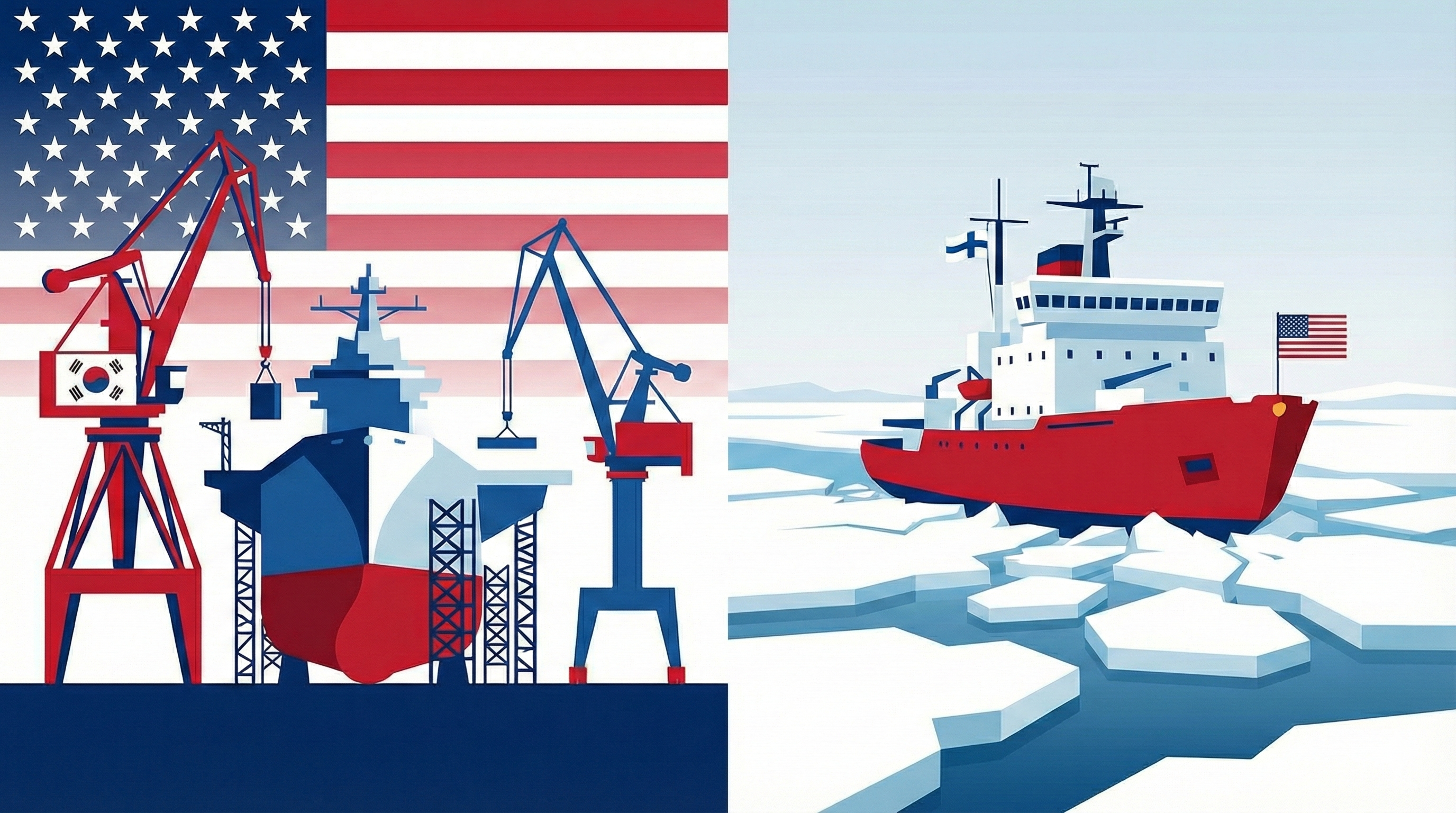
In particular, it must be articulated that ‘minimum communication and peace’ on the Korean Peninsula is an indispensable prerequisite for the organic functioning of the ‘northern bolt (North Korea)’ and the ‘southern net (South Korea)’ pursued by the United States. It should be emphasized that the old concern that improving inter-Korean relations could weaken the justification for the presence of USFK has already been largely offset amidst the U.S. trend of ‘Neo-Isolationism’ and the strengthening of homeland defense priorities. Through this, an environment can be created where the United States can concentrate on its top-priority strategy of efficient containment of China, while simultaneously maintaining the cohesion of the alliance through close technological cooperation with hardware sectors such as shipbuilding.
The subtle strategic divergence between China and the North Korea-Russia pair, existing behind the macroscopic confrontation between the U.S. and China, provides an important strategic space for South Korea. Since China tends to prioritize avoiding regional bloc-formation that burdens its security, South Korea must seek a strategic contact point considering this position of China. At the same time, the core of a strategy that aligns with South Korea’s national interest lies in supporting the expansion of leverage for North Korea and Russia so that their leverage against China is not excessively weakened, and alleviating their asymmetry vis-à-vis China. The excessive weakening of Russia’s leverage against China inevitably results in strategic benefits for China, which intensifies U.S.-China competition and increases South Korea’s security burden.
● For instance, in 2012, Russia established a plan to transition its anti-aircraft weapon system from the S-400 to the S-500. As Russia’s dependence on China deepened due to Western sanctions following the Crimean crisis in 2014, Russia’s leverage against China weakened. This led to the conclusion of the export of the advanced anti-aircraft weapon S-400 to China (2015), which had been a long-standing desire of China. And as China deployed this near the Korean Peninsula, it led to a strategic chain reaction triggering the deployment of THAAD by the United States. This led to the straining of ROK-China relations, driving South Korea into a crisis of being exposed at the forefront of regional bloc-formation.
● The current close alignment between North Korea and Russia also reflects strategic struggle stemming from the deepening asymmetry of both nations vis-à-vis China. We must prevent the vicious cycle where such alignment accelerates regional bloc-formation and heightens military tension, driving South Korea into the center of conflict between regional blocs.
Therefore, South Korea must preferentially pursue the restoration of relations with Russia. Leverage in the process of improving relations must be secured by starting preemptive communication before the end of the Russia-Ukraine war. If direct improvement of relations with Russia is restricted due to the political situation, multilateral contact points with countries that share similar security dilemmas regarding China while bordering it, such as Vietnam and Mongolia, should be actively utilized. This is also a strategy to form a common denominator with neighboring countries in the region that are concerned about increasing asymmetry vis-à-vis China in a situation where uncertainty originating from the U.S. is increasing.
Furthermore, by seeking improved relations with North Korea through such multilateral efforts, we must establish a strategic counterweight to China’s disproportionate influence over Pyongyang. From the North’s perspective, this is significant as it provides a strategic rationale and a new framework to revitalize inter-Korean engagement, which has otherwise lost bilateral momentum. In particular, it could serve as a tangible incentivefor North Korea by alleviating their strategic anxieties stemming from an intensifying dependence on China. Through this process, we should also strive to mitigate the asymmetry in our relationship with China—which is likely to deepen amid growing uncertainties from the U.S.—and pursue a strategy that secures our autonomous space in North Korean and Northern affairs.
● Our logic toward the U.S. should focus on increasing the efficiency of the U.S. strategy toward China. It emphasizes that South Korea’s Northern Policy lowers the dependence of North Korea and Russia on China and increases their bargaining power, thereby substantially contributing to the efficiency of the U.S. strategy to contain China.
● Our logic toward China should be centered on alleviating regional tensions and preventing regional bloc-formation. We must distinguish the efforts of regional states to mitigate their asymmetry with China from the U.S.-led solidarity aimed at containment. That is, we should articulate a 'peaceful de-escalation' framework, arguing that the strengthening of autonomous relations among regional actors actually prevents bloc-based polarization and, consequently, alleviates the security and military burdens facing China.
The goal of such strategic sophistication is to elicit acquiescence and understanding from both the U.S. and China as a ‘second-best option.’ Through this, South Korea will be able to complete the foundation for ‘preemptive stabilization’ that safeguards national autonomy and national interests without being consumed as a vanguard for a specific bloc, even amidst the uncertainty of the security environment such as potential geopolitical upheavals originating from the Arctic. And the success of this strategy hinges on whether South Korea can move beyond mere declarations and secure the tangible capabilities required to serve as an 'irreplaceable security partner' for the U.S.—leveraging its advanced manufacturing and shipbuilding prowess—while simultaneously acting as a 'strategic balancer' vis-à-vis China and Russia.
[1] 中华人民共和国国务院新闻办公室, 《中国的北极政策》 白皮书(全文). (2018.01.26.) http://www.scio.gov.cn/zfbps/ndhf/2018n/202207/t20220704_130568.html
[2] The various shipping-related materials mentioned referenced Lee Dae-sik, “Is the Arctic Really Opening?”, RIO No. 9 (January Issue) Special Feature, (January 31, 2025). https://www.rioins.kr/notice/notice1__list.html?bmain=view&uid=34
[3] Jeon Jae-woo, “Geopolitical Implications of the Sino-Russian ‘Power of Siberia 2’,” KIDA Security Strategy FOCUS, Korea Institute for Defense Analyses, (December 17, 2025).
[4] 中华人民共和国外交部, 中华人民共和国和俄罗斯联邦关于在两国建交75周年之际深化新时代全面战略协作伙伴关系的联合声明(全文), (2024.05.16.) https://www.mfa.gov.cn/zyxw/202405/t20240516_11305860.shtml Article 3 of this statement stipulated that “Both sides will engage in constructive dialogue regarding the matter of navigation to the sea via the lower Tumen River by ships of the Democratic People’s Republic of Korea and China. (双方将同朝鲜民主主义人民共和国就中国船只经图们江下游出海航行事宜开展建设性对话).”.
[5] Joseph S. Bermudez Jr., Victor Cha and Jennifer Jun, “Significant Progress of the North Korea-Russia Road Bridge”, Beyond Parallel. CSIS. October 14 2025. https://beyondparallel.csis.org/significant-progress-of-the-north-korea-russia-road-bridge
■ Jaewoo JUN is a Rersearch Fellow at the Korea Institute for Defense Analyses (KIDA).
■ Translated and edited by Inhwan OH, EAI Senior Research Fellow; Sangjun LEE, EAI Research Associate
For inquiries: 02 2277 1683 (ext. 211) | leesj@eai.or.kr