Prospects Surrounding the U.S. Airstrike on Iran and Rumors of North Korea-U.S. Contact
- Commentary
- March 06, 2026

- Ihn-Hwi PARK
- Dean, Graduate School of International Studies at Ewha Womans University
In-hwi Park, Dean of the Graduate School of International Studies at Ewha Womans University, analyzes the potential impact of the recent U.S. airstrike on Iran on North Korea-U.S. relations and the Korean Peninsula. The author presents two scenarios regarding North Korea's reaction to the Middle East crisis: either clinging more fiercely to its nuclear arsenal for regime survival or utilizing it as proactive leverage to draw the U.S. to the negotiating table. Dean Park highlights the possibility of upcoming high-level contacts between North Korea and the U.S., expressing hope that Pyongyang will abandon its isolationist strategy and engage in serious negotiations that could lead to the unification of the Korean Peninsula.
■ See Korean Version on EAI Website
In February 1979, the Pahlavi dynasty, which had persistently adhered to a constitutional monarchy isolated from public sentiment, was overthrown by Iranian citizens. The success of the Iranian Revolution led by Ruhollah Khomeini resulted in the establishment of the current Islamic Republic of Iran (I.R. IRAN). The global democratization movement that originated with the Prague Spring in 1968 reached not only South America, embodied by Argentina and Chile, but also the Middle East. This is precisely the "Third Wave" articulated by Samuel Huntington. The East Asian region was no exception to the invisible yet highly potent wave of democratization. It facilitated a democratic transition in regions such as the Philippines, South Korea, and Taiwan. The advancement of democracy that unfolded globally in the late 20th century is thus macroscopically interconnected. Against this backdrop, certain commentators occasionally posit the somewhat tenuous claim that Khomeini's Iranian Revolution led to the assassination of Park Chung-hee on the Korean Peninsula in October of the same year.
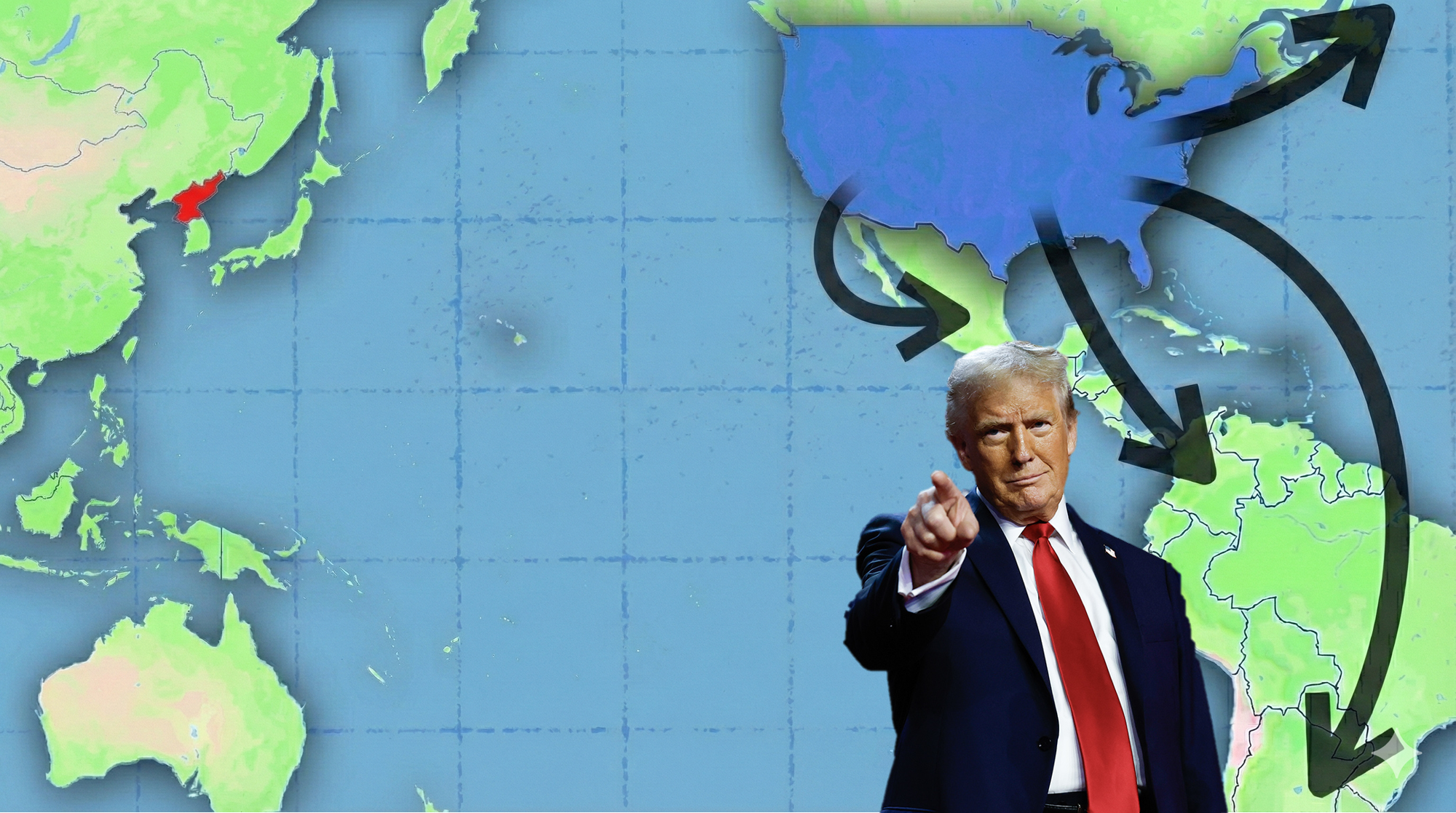
Trumpism is not an academic or objective term, and although there is no universally accepted definition, it used to entail criticizing the role of the U.S. as a global policeman in foreign relations and disparaging external military intervention as an unnecessary waste of resources. However, the reality of Trumpism as it enters its second term demonstrates the exact opposite. Although it invoked the rationale of national security, it asserts that Canada should be incorporated as the 51st state of the U.S., and the logic behind the U.S. takeover of Greenland is similarly purported to be for the security of the U.S. and the world. Going a step further, the Trump administration did not hesitate to execute a brief but formidable military operation to apprehend the president of Venezuela. The recent invasion of Iran is also a mismatch with the claims regarding the futility of external military intervention that President Trump had habitually championed.
From the perspective of a state with hegemonic power such as the U.S., it is understood that the deployment of foreign strategy can be freely revised in terms of its direction and content, and can fundamentally transform if necessary. The core of the matter is what impact the Trump administration's airstrike on Iran will ultimately exert on the Korean Peninsula issue, and whether we can independently formulate a predictable outlook. North Korea convened its 9th Party Congress from February 19 to 25, during which Chairman Kim Jong Un directly explained, "If the U.S. respects the current status of our state as stipulated in the Republic's constitution and withdraws its hostile policy toward Korea, there is no reason for us not to maintain good relations with the U.S.," publicly remarking that "the prospects for DPRK-U.S. relations depend entirely on the attitude of the U.S. side." This can be interpreted as a proactive overture for dialogue with the U.S. Furthermore, concerning the airstrike on Iran, while North Korea condemns the U.S. administration on a principled level as committing an act of war, it refrains from mentioning President Trump directly. It is reasonable to assess this as a somewhat muted level of response when compared to the anti-U.S. condemnations issued over the Iran situation by China and Russia, the states within the so-called authoritarian bloc.
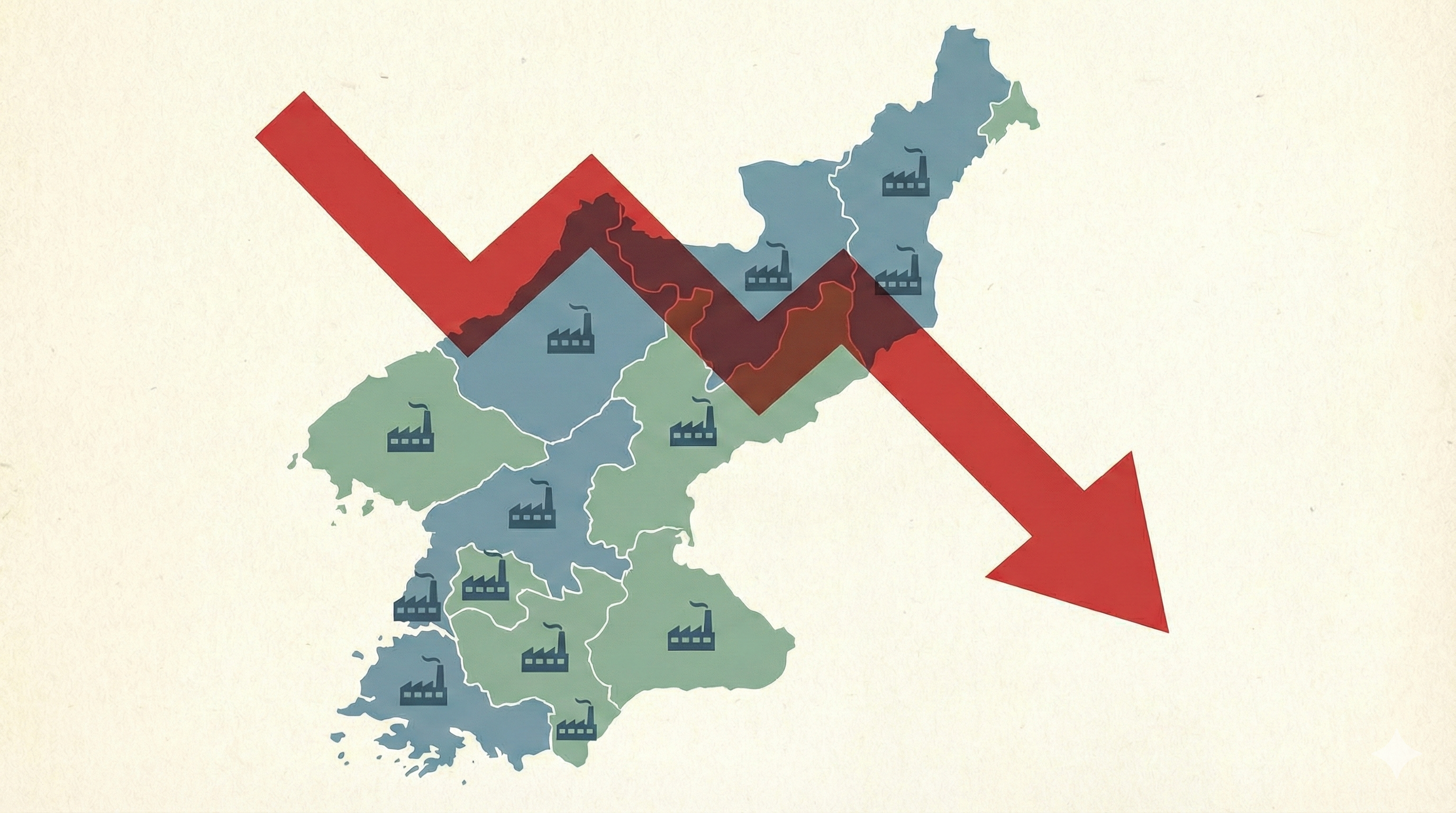
Consequently, it is necessary to analyze North Korea's primary calculations regarding the recent series of military developments unfolding in the Middle East surrounding Iran. First, on a superficial level―as evidenced by the large-scale military actions the U.S. previously executed against Libya, Syria, and Iraq―North Korea will likely become even more obsessed with the nuclear force it has independently secured. While they may fear the formidable U.S. military power confirmed through the airstrike on Iran, they presumably assess that if they stubbornly retain the status of their acquired nuclear force to the end, the U.S. will correspondingly be unable to underestimate North Korea. By asserting its nuclear force, North Korea had to endure various sanctions from the international community, and the diverse economic development plans repeatedly faltered due to resource deficiencies; nonetheless, it is likely reaffirming that its nuclear force remains the most reliable mechanism for ensuring North Korea's survival. Moreover, President Trump attributes the failure of nuclear negotiations as the paramount factor for the airstrike on Iran. According to the assertions of Oman, which mediated the nuclear negotiations between the U.S. and Iran, the U.S.-Iran nuclear talks were reportedly proceeding relatively smoothly; thus, it is impossible to determine precisely which side's explanation constitutes the truth. However, it remains clear that President Trump himself is acutely aware that the collapse of nuclear negotiations serves as a sufficient rationale for launching a large-scale military attack against Iran. Logically, North Korea must also be fully aware that such a stance by President Trump can readily be applied to North Korean relations as well.
Second, North Korea is highly aware that its secured nuclear force possesses multifaceted utility. While it will certainly draw a lesson from the Iran crisis to never relinquish its nuclear weapons, it can also be concluded that North Korea recognizes its nuclear arsenal as an effective instrument to compel the U.S. to the negotiating table. As is widely recognized, upon commencing his second term, President Trump has publicly designated North Korea as a Nuclear Power on multiple occasions. The dilemma, however, is that such recognition of North Korea's nuclear possession by President Trump is contingent upon North Korea's nuclear weapons being validated for their utility in negotiations; should the geopolitical landscape rapidly shift and the Trump administration prioritize the security threat dimension of North Korea's nuclear program over its diplomatic utility, there is theoretically no guarantee that the events in Iran will not be replicated in North Korea. Naturally, it is important to note that due to variables such as the geopolitical disparities between North Korea and Iran, the developmental maturity of North Korea's nuclear weapons, the distinct diplomatic dynamics between North Korea and China, and the reality of the divided Korean Peninsula, the Iran issue and the North Korea issue are fundamentally disparate in the perspective of the U.S.
In recent times, the prospect of negotiations between North Korea and the U.S. during the "late March to early April" timeframe has been frequently cited in domestic and international media. This originates from the projection that high-level engagements between North Korea and the U.S. could materialize, leveraging the U.S.-China summit scheduled to be held in Beijing in early April, and such high-level contact inherently encompasses the possibility of a summit between President Trump and Chairman Kim Jong Un. At this juncture, two scenarios can be hypothesized. The first is a scenario where the Iran crisis compels North Korea to deduce that between the self-defense utility and the negotiating utility of its nuclear weapons, the latter bears greater significance, thereby inducing a more proactive response to the overtures for dialogue consistently signaled by President Trump. The alternative scenario posits that since North Korea has historically exhibited a pronounced proclivity to exploit international security crises as opportunities for its regime survival, it will, without exception in this instance, diplomatically retrench further; rather than acceding to negotiations with President Trump, it will tighten ideological control over North Korean citizens and adopt a more insular posture in its external relations, ultimately adhering even more rigidly to its traditional survival strategy. As is invariably the case, accurately forecasting North Korea's behavioral trajectory is complex, yet there is a high probability that one of these two scenarios will unfold.
Even setting aside the somewhat speculative analysis that the Iranian Revolution of 1979 precipitated the demise of Park Chung-hee amid the global democratic current known as the Third Wave, it is anticipated that the recent U.S. airstrike on Iran and the subsequent Middle East turbulence will exert a profound impact on the Korean Peninsula in some configuration. Consequently, it is hoped that North Korea, which has maintained a strict isolationist stance since the Korean War, will engage in unprecedentedly earnest negotiations with President Trump, and it is anticipated that such negotiations will ultimately culminate in the transformation of North Korea and the unification of the Korean Peninsula. ■
■ Ihn-Hwi PARK is the Dean of the Graduate School of International Studies at Ewha Womans University.
■ Translated and edited by Sangjun LEE, EAI Research Associate; Inhwan OH, EAI Senior Research Fellow; Sowon KIM, EAI Intern.
For inquiries: 02 2277 1683 (ext. 211) | leesj@eai.or.kr