The Individual Level of Analysis and Restarting Summits with North Korea
- Commentary
- February 06, 2026

- Leif-Eric EASLEY
- Professor, Ewha Womans University
Leif-Eric EASLEY (Professor, Ewha Womans University) explores the significance of the individual level of analysis in international relations, particularly concerning the potential restart of summits with North Korea. The author outlines twelve categories of leader-specific variables, such as personal characteristics and political ideology, to examine how the leadership styles of Donald Trump, Kim Jong-un, and Lee Jae-myung might shape future diplomatic outcomes. Prof. Easley emphasizes that while individual agency is critical, sustainable summitry must be anchored in institutional frameworks and a rules-based order rather than being driven by personal proclivities.
Introduction
Utilizing different levels of analysis in the study of international relations dates back at least to Kenneth Waltz’s classic formulation of the ‘three images’ in Man, the State, and War (1959). Waltz demonstrated that explanations of conflict vary depending on whether scholars emphasize human nature, domestic political factors, or the structure of the international system. This insight helped reshape the field of IR theory. Later contributions (Waltz, 1979) further systematized the study of interstate interactions, encouraging subsequent generations to examine various causal processes rather than assume or champion their preferred driver of international outcomes.
Building on this tradition, I teach introductory IR courses employing what my students jokingly refer to as the Easley 3×3 matrix (I’m certainly not the only professor who uses such a tool). The rows of the matrix represent the individual, domestic, and international levels of analysis; the columns apply realist (power-focused), liberal-institutionalist (interdependence-oriented), and constructivist (identity/ideas-based) theoretical approaches to international relations. The matrix aims to generate nine competing explanations for almost any IR trend or outcome. Its pedagogical utility is to encourage students to consider rival theories, explicitly articulate alternative hypotheses, and weigh empirical evidence with more analytical rigor than talking heads and political podcasters.
However, there are longstanding academic debates about ontological and methodological limitations (Singer, 1961), calling for more granular analysis than simply contrasting individual, domestic, and international-level factors. Given the increasing foreign policy relevance of leaders such as Donald J. Trump, Xi Jinping, and Vladimir Putin, this article explores in greater detail the variables scholars try to assess at the individual level of analysis. A dozen categories are outlined with insights from the academic literature, along with illustrative examples relevant to the potential restart of U.S. and South Korean high-level meetings with North Korea. This framework is neither exhaustive nor representative of a consensus in the literature, but as policymakers and analysts ponder the possibility of Trump and Lee Jae-myung holding summits with Kim Jong-un as soon as April 2026 (Cronin, 2025; HJ Lee, 2025), this article offers a primer on how political scientists study the role of leaders in foreign policy and global governance.
1. Personal Characteristics and Leadership Style
Scholars have long investigated how individual dispositions—calmness under pressure, principled decision-making, personal integrity—shape foreign policy behavior (Hermann, 1980). Research on leader traits has empirically correlated belief in one’s ability to control events, conceptual complexity, and need for power with crisis behavior and negotiation strategies (Hermann, 2003). These traits also affect how leaders interpret information, manage uncertainty, and respond to threats.
Political biographers make a living analyzing the personal characteristics of leaders. In the case of Trump, a domineering, low conceptual complexity style may contribute not only to rhetorical volatility but also to the use of blunt policy instruments like tariffs and threats of military force. Such traits could also explain why Trump equates leadership with ‘great men of history’ who engage in high-stakes negotiations on the chessboard of geopolitics, with expanding or contracting spheres of influence. His confidence in personal dealmaking and affinity for improvised, theatrical diplomacy indicate he might pursue another summit with Kim Jong-un as an opportunity to build upon his earlier never-been-done, made-for-TV efforts.
2. Human Nature, Ethics, and Worldview
Leaders’ assumptions about human nature—whether people are innately good or selfish, and whether they are typically socialized to be cooperative or conflictual—predispose expectations about trust, deterrence, and the use of force. Such beliefs inform judgments about reputation and credibility (Mercer, 1996). IR studies going back to classical realist traditions suggest that leader ethics and worldviews determine foreign policy motivations in ways not accounted for by domestic political constraints or international structural incentives (Lebow, 2009, 16).
Kim Jong-un’s willingness to meet U.S. and South Korean presidents in 2018 reflected a temporary calculation that diplomacy could yield sanctions relief and regime security guarantees. By contrast, his refusal to restart similar meetings since the COVID-19 pandemic reflects deep distrust of Washington and Seoul, frustration over the Hanoi summit collapse, and perhaps heightened concern for personal safety. Kim likely believes that engagement with Xi Jinping and Vladimir Putin—who provide diplomatic backing and technological assistance—offers benefits with fewer risks to personal security. His summits with Xi and Putin also signal a preference for aligning with authoritarian counterparts (Kotkin, 2025), rather than resuming negotiations with democratically-elected leaders who do not share his worldviews and do not remain in office as long.
3. Political Ideology
Ideological orientations are tied to leaders’ political priorities, perceptions of ingroup versus outgroup identity, and normative beliefs about what is right for nations and societies. Foreign policy research demonstrates how ideology structures policymakers’ assumptions about military operations, multilateralism, and engagement (Holsti, 2006, 175). Ideology might not entirely determine outcomes, but it helps construct a cognitive map for understanding and interpreting events.
South Korean President Lee Jae-myung—despite having led the progressive party while in opposition—demonstrates an ideologically flexible pragmatism. His diplomatic stance emphasizes cooperative relations with Washington and Tokyo, and calibrated interaction with Beijing (Easley, 2025). While skeptical of relying on the military deterrence and economic sanctions approaches of South Korean conservatives, he displays a calculated patience for pursuing engagement with North Korea. He could pursue an inter-Korean summit to re-institutionalize communication and exchanges, depending on the progress of a Trump-Kim summit.
4. Religious-Ethnic Identity and Forms of Nationalism
Identity guides leaders’ priorities and legitimizing narratives. Religious and ethnic identities tied to territorial claims or historical grievances can either restrain or encourage displays of force (Toft, 2003). Nationalism can both motivate and be used to justify foreign policy choices by leaders looking to consolidate their popular authority and domestic control (Brubaker, 1996).
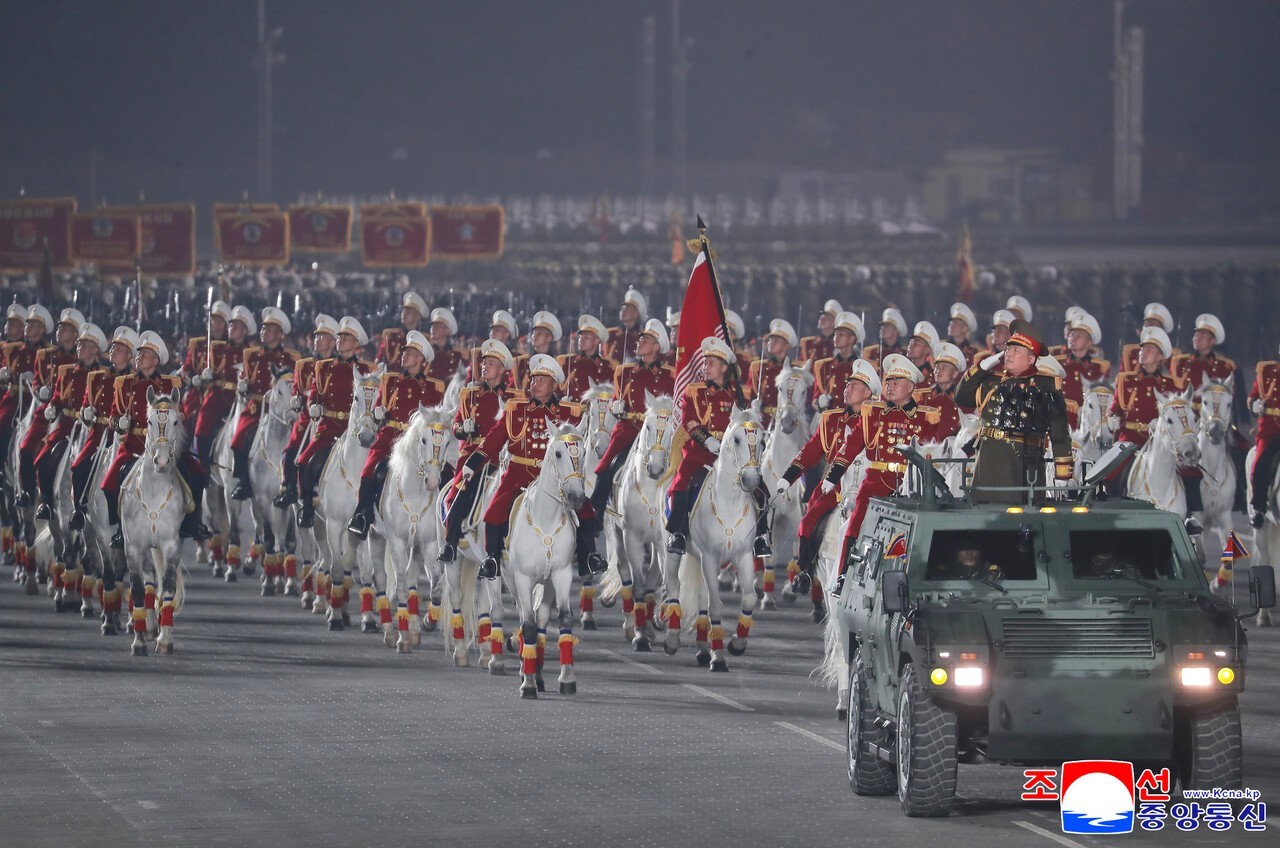
Kim Jong-un has turned away from a pan-Korean identity based on shared ethnicity, culture, and history, suggesting Pyongyang is distancing itself from Seoul. Kim’s brand of nationalism relies more on juche self-reliance and the mythology of anti-imperialism to justify regime survival priorities and military modernization. His narrative casts external threats from the United States and South Korea as existential, legitimizing nuclear weapons development as a guarantor of sovereignty. Given this nationalist framing, Kim displays little to no intention of negotiating away nuclear capabilities. He is probably delaying engagement with Washington and Seoul until he has maximized gains from Russia and China, whose support enables him to consolidate the status and capabilities of missile and nuclear programs before eventually seeking additional economic benefits through renewed summitry.
5. Socio-Economic Background and Class Identity
A leader’s socio-economic background can shape empathy toward minority and less privileged groups, distributive priorities, and attachment to certain economic models. The art, music, and traditions a leader embraces affect who they relate to and their relatability with the public. Leaders from working-class backgrounds tend to favor different policies than financial elites, and research has uncovered correlations between occupational history and policy choices (Carnes, 2013, 95-107). Notably, differences in background can cultivate trade preferences, diplomatic style, and sensitivity to global inequality.
Trump, a billionaire businessman and celebrity from a wealthy family, uses a combination of traditional and social media, pop-culture and populism to reach his political supporters. At the same time, he embraces the idea that elite leaders should personally ‘make a deal’—a frame he explicitly invoked during his summits with Kim. He appears to care more about financial outcomes than legal principles or policy processes. Trump’s emphasis on personal rapport, power status, and transactional bargaining led him to treat engagement with Kim as an interaction with someone he ‘gets along with very well’ and shares understandings about winning in terms of business and economic growth.
6. Education and Professional Socialization
Educational background and professional networks develop leaders’ operational codes involving both philosophical and instrumental beliefs that can unconsciously affect political calculations (George, 1969). Whether a leader has training in law, experience in business, has been an athlete in competitive sports, or has served in the military is often considered both in terms of qualifications and possible sources of bias. Knowledge of economics can provide a reality check, applying evidence-based scrutiny to various policy proposals (Christensen, 2018). Exposure to different organizational environments and physical competition can affect risk tolerance and focus on strategic innovation (Horowitz, 2010).
Lee Jae-myung’s formative experiences include working as a child laborer and suffering a debilitating factory accident. Lee later pursued a legal career focused on human and labor rights after obtaining his license (M Kim, 2025). His education and professional socialization inform a political orientation of restraining the strong while protecting the weak (Cho, 2021). Applied to inter-Korean relations, this orientation manifests in Lee’s emphasis on patient, process-driven diplomacy. In his 80th Liberation Day address, Lee articulated his approach to engagement with North Korea: restoring dialogue and trust, respecting North Korean sovereignty in pursuit of coexistence, and advancing denuclearization as a long-term objective rather than a precondition (JM Lee, 2025).
7. Historical Lessons and Interpersonal Interactions
Decision-makers learn from previous negotiations, crises, and interpersonal encounters. Through international interactions, leaders can learn to cooperate, or they can draw lessons about the need to be suspicious or even distrustful, which can result in unrealized cooperation (Larson, 2000, 155-162). References to historical examples and interpretations can involve reasoning by analogy (Khong, 1992). Cognitive heuristics—mental shortcuts for understanding current challenges based on past experiences—can have psychological effects like distorted threat perceptions (Stein, 1988).
Trump-Kim summit diplomacy in 2018-2019 demonstrated how interpersonal engagement can temporarily reframe adversarial relationships. The collapse of the Hanoi Summit, however, likely reinforced Kim’s suspicion that U.S. leaders offer diplomatic gestures without meaningful sanctions relief, leaving him more focused on perceived threats from the United States than on the opportunity costs of Pyongyang’s policies. Kim also appeared to feel personally betrayed by Moon Jae-in over the failure at Hanoi and may hold a grudge against South Korean leaders.
Lee Jae-myung has therefore sought to distinguish himself from his predecessors, especially Yoon Suk-yeol, whose administration openly discussed regime change and flew drones over Pyongyang. While it is easy to blame Yoon for strained inter-Korean relations following his impeachment and incarceration after a failed martial law attempt, Kim’s designation of South Korea since December 2023 as a separate and hostile state reflects a strategic rather than tactical decision (SK Kim, 2025).
Trump’s pledge to aggressively defend U.S. influence in the Western Hemisphere (White House, 2025b) reflects a self-conception as a historical figure akin to presidents Monroe and McKinley during eras of expansion. His obsession with acquiring Greenland, not widely shared by other branches of government or the U.S. public, appears driven by a personal desire to expand U.S. territory and claim credit for one of the greatest real estate transactions of all time (Svendsen, 2025). When European governments firmly rejected Trump’s maximalist demands, he climbed down from threats of additional tariffs and hints of military action to claim victory in announcing a ‘framework agreement’ with NATO to expand U.S. access to Greenland for Arctic security, missile defense, and critical minerals. Kim likely interprets this pattern as requiring initial resistance to Trump’s pressure, followed by an ambiguous compromise to be renegotiated later.
8. Rational Calculation vs. Emotional Behavior
Leaders vary in reliance on analytic reasoning versus intuition and emotion. Decision-making can be non-rational (as opposed to irrational) by prioritizing principles like honor, sacrifice, and piety over cost-benefit calculation. So-called bounded rationality uses psychology to explain how the human brain works differently from computers and AIs, sometimes thinking fast or automatically, sometimes slow and deliberatively (Kahneman, 2011). Even when leaders try to account for numerous variables and maximize utility, some are more risk-averse while others are more risk-acceptant. Game theoretic modeling shows how strategic calculations can be complicated under uncertainty and different concepts of utility, especially as leaders selfishly conflate their interests with the national interest (Bueno de Mesquita and Smith, 2012).
Trump’s impulsive and norm-violating style stands out in U.S. diplomatic history. He is thus far the only American president willing to take the risks of meeting a North Korean leader without extensive preparation or bureaucratic consensus. Such spontaneity could again produce unconventional and unpredictable outcomes (Easley, 2019). Trump’s conspicuous display in the White House of a photograph with Kim Jong-un from Panmunjom (News1, 2019) and his repeated boasts of personal rapport with authoritarian leaders illustrate a gut-driven rather than carefully calculated approach to high-stakes summitry.
9. Psychological Biases and Cognitive Limitations
Cognitive psychology profoundly influences individual-level analysis. Selective perception, attribution errors, and confirmation bias can impact threat assessments (Jervis, 1976). Age, health, and media-related information processing inevitably matter. Research using experiments and simulations suggests that stress and physiological responses affect decision-making, especially in unfamiliar situations (McDermott, 2004). How actors assess the intentions of would-be adversaries is also critical for understanding the biases that can cause leaders to reach very different conclusions than their advisers and intelligence agencies (Yarhi-Milo, 2014).
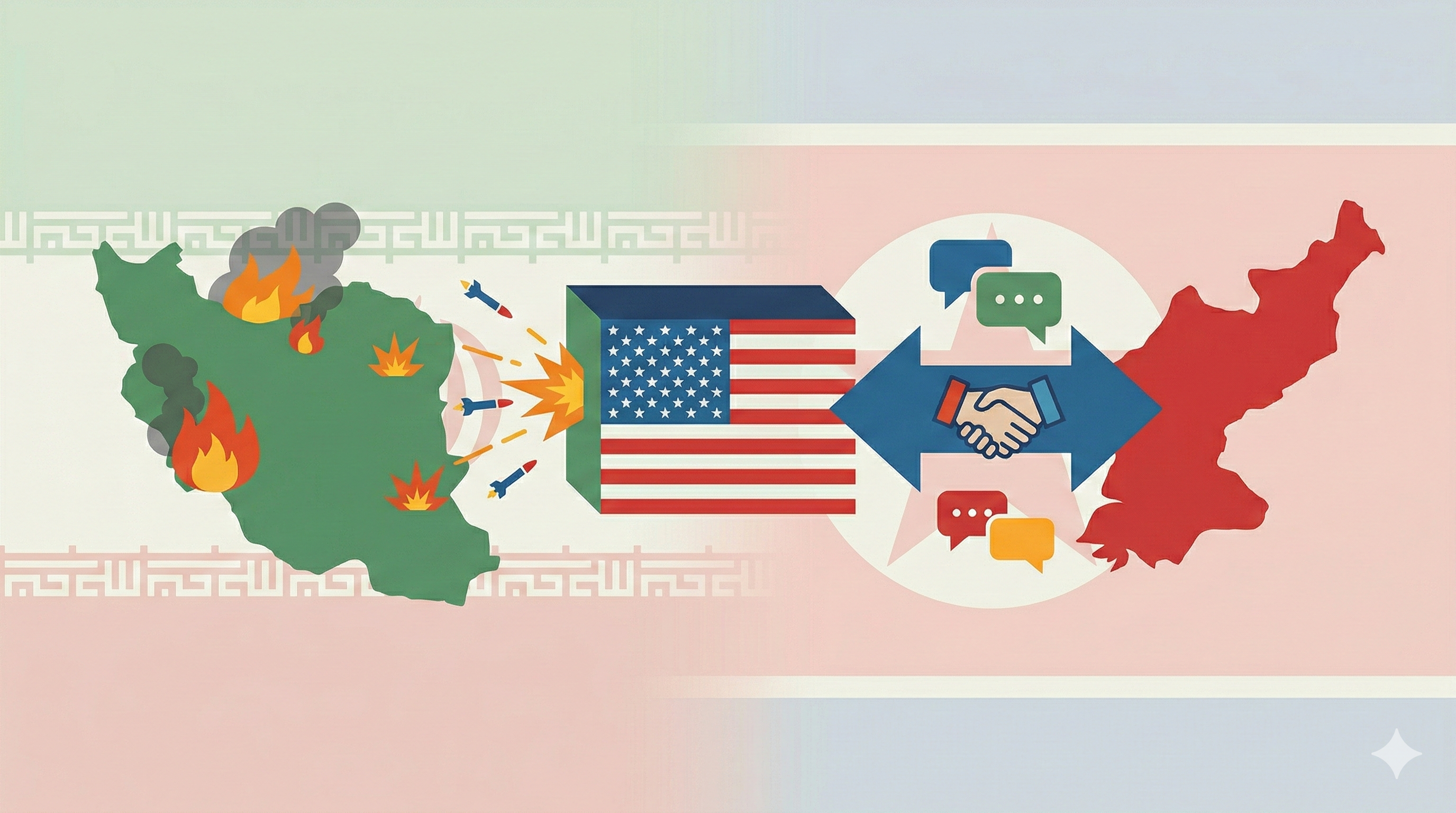
Trump’s tendency to redefine adversaries rapidly, respond to televised and social media cues, and interpret foreign leaders’ flattery as proof of goodwill raises questions about judgment, especially in high-stakes settings such as his August 2025 summit with Putin in Alaska. However, Trump is not a simple isolationist as some observers alleged (O’Hanlon, 2026); his America-first foreign policy can take the form of aggressive military operations, as seen in the bombing of Iranian nuclear sites in June 2025 and the capture of Venezuelan president Nicolas Maduro in January 2026. Trump’s extemporaneous remarks arguably demonstrate cognitive aging and severe forms of bias, but his no-shame approach to politics and publicity entails daily efforts to dominate the news cycle, desensitizing the public to scandal and often forcing rivals to be reactive rather than proactive.
10. Personal Narrative, Legacy, and Motivation
Leaders often act with a sense of mission, cognizant of their potential place in history. Individual self-conceptions can steer both coalition politics and foreign policy agendas (Kaarbo, 2012). Decision-makers may be guided by a personal narrative, misled by overconfidence, or motivated by a sense of legacy. Interactions with other actors can rely as much on emotional intelligence as on rational calculation (Greenstein, 2009).
Trump has openly sought a Nobel Peace Prize and repeatedly framed North Korea diplomacy as a legacy project. Lee Jae-myung told Trump during their first meeting at the White House in August 2025, “if you become the peacemaker, then I will assist you by being a pacemaker” (American Presidency Project, 2025), playing to Trump’s coveted image as a negotiator uniquely capable of solving intractable problems. Trump loves to project a peacemaker image but demonstrates a penchant for flashy ceremony and personal aggrandizement over policy substance, such as at the Thailand-Cambodia ceasefire press conference in October 2025 (White House, 2025a), the renaming of the USIP as the Trump Institute of Peace in December (Livesay, 2025), and the launching of the so-called ‘Board of Peace’ in January 2026 to support ceasefire and reconstruction efforts in Gaza (Williams, Talmazan, and Duffy, 2026).
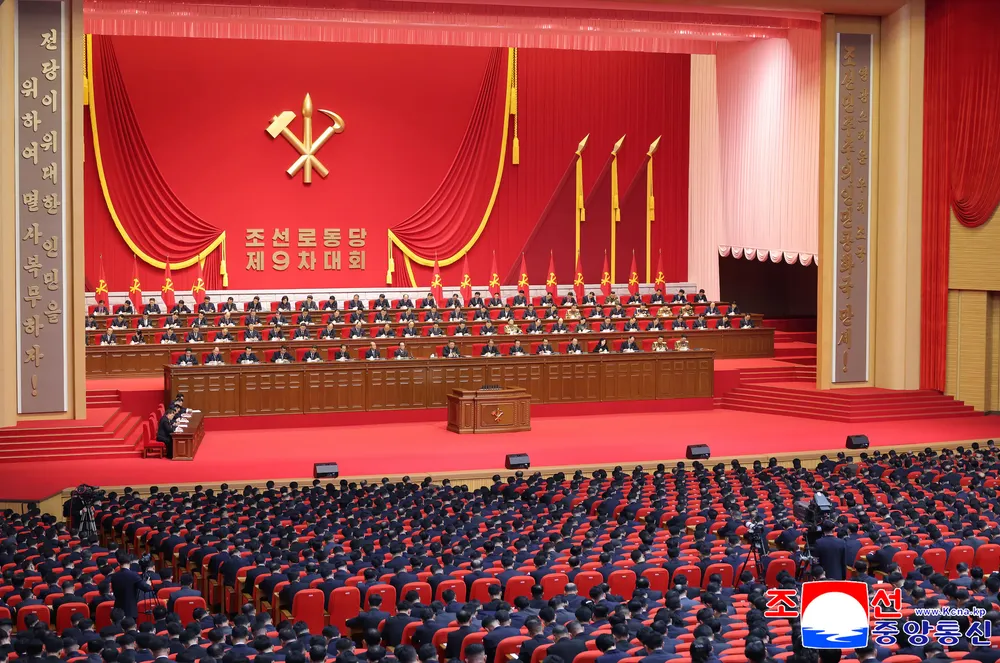
Kim Jong-un may thus lack interest in a deal with Trump, doubting the sustainability of a grand bargain. South Korea’s improving military technologies, partnerships with the U.S. and Japan, and soft power could threaten the very legitimacy of a regime tied to human rights abuses and an economically inefficient system. Kim seems more concerned about his family’s future and could be politically soft-launching his daughter as a potential successor. Analysts will be watching remarks at the 9th Party Congress for indications of policy direction (HR Lee, 2025), as Kim looks to exploit Trump’s domestic political timeline and ego considerations for North Korean objectives.
11. Decision-making Processes and Constraints
Foreign Policy Analysis (FPA) links individual preferences to institutional context, often using matrices of different factors to explain decision-making. Political actors link issues in domestic and international politics in the process of elite competition (Rosenau, 1969). Advisers and consultative bodies around leaders play a role at the intersection of material and ideational factors in policy decision units (Hudson, 2007). Leaders are susceptible to framing effects, especially in how they evaluate and try to avoid potential losses (Levy, 1997). Bureaucratic processes and institutional constraints are also important for understanding the path dependence of policy outcomes (Allison, 1971).
Trump frequently bypassed established institutional and legal procedures, sidelined interagency processes, and relied on informal advisors. Policy advocates around the president can appeal to leader biases (the last administration’s disastrous immigration policies…), ego (you’re the only one who can accomplish the greatest…), grudges (we have to punish your rival for…we need to save American companies from getting ripped off…), and favorite issues (there are huge deals to be made for real estate, oil, minerals…) Conflicts of interest can also be at issue when family members and business ventures are concerned.
Yet various types of constraints—laws, court rulings, bureaucratic pushback and slow rolling implementation, congressional oversight and budgetary approval, media reporting, and upcoming election incentives—often check leader prerogatives. This could help explain the collapse of the Hanoi summit in 2019, where Trump decided that ‘no deal is better than a bad deal’ considering how an agreement with North Korea would be interpreted at home (Sigal, 2019).
12. Accountability, Learning, and Responsiveness
Some leaders adapt based on electoral incentives and experience; others double down on prior beliefs and patterns to avoid cognitive dissonance and accusations of hypocrisy. Democratic peace research maintains that accountability to democratic institutions affects risk-taking in foreign policy, translating to a preference for negotiation over conflict with fellow democracies (Russett, 1994). But this does not necessarily apply to autocracies. Leaders of various governments can learn from errors of commission as well as omission (Walker and Malici, 2011). But they may not be as responsive to audience costs, or as often penalized for issuing threats, as scholars focused on domestic and international levels of analysis would expect (Snyder and Borghard, 2011).
Kim possibly learned from the failure of the Hanoi summit that with no electoral accountability and significant control over the domestic political narrative, he faces little pressure to own up to failures in leadership and policymaking. He might thus push the geopolitical envelope further, as he has by sending troops to Russia, before returning to negotiations with the U.S. and South Korea.
Trump, however, has had to respond and change tact in his trade war with China after Beijing weaponized rare earth export restrictions and soybean purchases to target economic retaliation against Trump’s domestic supporters (Zhao, 2026). To get back to the dealmaking table, Trump currently seems to play down China-related threats to the U.S. and its allies, the need for North Korea’s denuclearization, or any concerns about human rights.
Conclusion: Leadership, Global Governance, and Future Summits
These 12 categories demonstrate that leader-level variables are useful, even essential, for explaining foreign policy variation. International relations scholarship continues to wrestle with the relative weights of individual agency, domestic politics, and structural approaches while seeking generalizable explanations. IR theories would have difficulty explaining the contemporary foreign policies of the United States, China, Russia, and North Korea without analyses of the decision-making processes of Trump, Xi, Putin, and Kim.
Such actors have raised concerns about the future of multilateralism, not only as manifested in leader summitry, but more importantly, as applied to public goods in the form of global governance. Political polarization, economic uncertainty, institutional decay, technological disruption, and myriad global challenges demand collective action, but personalistic governments are undermining coordination (Gunitsky and Sinanoglu, 2026). Xi’s handling of the COVID-19 pandemic accelerated China’s diplomatic decoupling with other major powers. Trump’s divestment from foreign assistance and international organizations has weakened American soft power and the capacity of multilateral institutions. Putin’s illegal war of aggression against Ukraine triggered systemic shocks and left the United Nations deadlocked across many issues. Kim’s focus on regime survival has frozen inter-Korean relations as well as efforts at denuclearization.
Yet even in a global governance recession—not unrelated to current democratic recessions (Diamond, 2025)—minilateral cooperation persists, middle powers increasingly seek stabilizing roles, and leadership turnover could reopen diplomatic space. Leader-specific variables can produce unexpected and suboptimal outcomes when not embedded within domestic legal frameworks and international organizations and alliances. Trump, Xi, Putin, and Kim might have personal rivalries, but ultimately, leaders successful in foreign policy are more likely to be those who can mobilize domestic support, handle crises responsibly, and sustainably invest in national resilience.
Whether summitry with North Korea succeeds or fails will depend not only on geopolitical conditions but also on the psychological dispositions, worldviews, and decision-making styles of the leaders involved. Scholars will continue to study the interaction of individual, domestic, and international factors. Meanwhile, policymakers would do well to encourage that summitry be anchored in a rules-based order rather than driven by personal proclivities. The individual level of analysis will be key for understanding where diplomacy with North Korea is headed within the larger context of global governance.
References
Allison, Graham T. 1971. Essence of Decision: Explaining the Cuban Missile Crisis. Boston: Little, Brown.
American Presidency Project. 2025. “Remarks Prior to a Meeting with President Lee Jae-myung of South Korea and an Exchange with Reporters.” University of California, Santa Barbara.
Brubaker, Rogers. 1996. Nationalism Reframed: Nationhood and the National Question in the New Europe. Cambridge: Cambridge University Press.
Bueno de Mesquita, Bruce, and Alastair Smith. 2012. The Dictator's Handbook: Why Bad Behavior is Almost Always Good Politics. New York: PublicAffairs.
Carnes, Nicholas. 2013. White-Collar Government: The Hidden Role of Class in Economic Policy Making. Chicago: University of Chicago Press.
Cho, Min-gyo. 2021. “이재명 ‘억강부약 대동세상 열겠다’ 출사표 [Lee Jae-myung’s candidacy declaration: ‘I will create a society of equality and shared prosperity by empowering the weak and restraining the powerful’].” Maeil Ilbo. July 1. https://www.m-i.kr/news/articleView.html?idxno=841955
Christensen, Johan. 2018. “Economic Knowledge and the Scientization of Policy Advice.” Policy Sciences 51: 291-311.
Cronin, Patrick M. 2025. “Prospects for Renewed U.S.-North Korean Diplomacy: Stability, Realism, and Strategic Clarity.” ROK-US Policy Brief, No. 11. Seoul National University Institute for Peace and Unification Studies. July. https://ipus.snu.ac.kr/wp-content/uploads/2025/07/ROK-US-POLICY-BRIEF-2025-JULY_ISSUE11.pdf
Diamond, Larry. 2025. “The Status and Prospects for Democracy in Asia.” East Asia Forum. June 27. https://eastasiaforum.org/2025/06/27/the-status-and-prospects-for-democracy-in-asia/
Easley, Leif-Eric. 2019. “The Limitations of Summits around the Korean Peninsula.” Asia Pacific Bulletin, No. 451. East-West Center. January. https://www.eastwestcenter.org/publications/the-limitations-summits-around-the-korean-peninsula
_____. 2025. “No Whiplash: Why Seoul’s Diplomacy Didn’t Redirect After a Snap Election.” Global NK. https://www.globalnk.org/topic/view.php?cd=COM000190
George, Alexander L. 1969. “The ‘Operational Code’: A Neglected Approach to the Study of Political Leaders and Decision-Making.” International Studies Quarterly 13, 2: 190-222.
Greenstein, Fred I. 2009. The Presidential Difference: Leadership Style from FDR to Barack Obama. Princeton: Princeton University Press.
Gunitsky, Seva, and Semuhi Sinanoglu. 2026. “The Personalist Global Order: When Individual Whims Drive Great-Power Policy.” Foreign Affairs. January 26. https://www.foreignaffairs.com/united-states/personalist-global-order
Hermann, Margaret G. 1980. “Explaining Foreign Policy Behavior Using the Personal Characteristics of Political Leaders.” International Studies Quarterly 24, 1: 7-46.
_____. 2003. “Assessing Leadership Style: Trait Analysis.” In The Psychological Assessment of Political Leaders, edited by Jerrold M. Post, 178-212. Ann Arbor: University of Michigan Press.
Holsti, Ole. 2006. Making American Foreign Policy. New York: Routledge.
Horowitz, Michael C. 2010. The Diffusion of Military Power: Causes and Consequences for International Politics. Princeton: Princeton University Press.
Hudson, Valerie M. 2007. Foreign Policy Analysis: Classic and Contemporary Theory. Lanham: Rowman & Littlefield.
Jervis, Robert. 1976. Perception and Misperception in International Politics. Princeton: Princeton University Press.
Kaarbo, Juliet. 2012. Coalition Politics and Cabinet Decision Making: A Comparative Analysis of Foreign Policy Choices. Ann Arbor: University of Michigan Press.
Kahneman, Daniel. 2011. Thinking, Fast and Slow. New York: Farrar, Straus and Giroux.
Khong, Yuen Foong. 1992. Analogies at War: Korea, Munich, Dien Bien Phu, and the Vietnam Decisions of 1965. Princeton: Princeton University Press.
Kim, Max. 2025. “How a former factory worker rose to South Korea’s presidency.” Los Angeles Times. June 3. https://www.latimes.com/world-nation/story/2025-06-03/how-a-former-factory-worker-rose-to-south-koreas-presidency
Kim, Sang-ki. 2025. “Inter-Korean Relations in 2025: Prospects for Shifts in DPRK’s ‘Two Hostile States’ Doctrine.” Global NK. February 25. https://www.globalnk.org/publication/view.php?cd=COM000171&ctype=1
Kotkin, Stephen. 2025. “The Weakness of the Strongmen: What Really Threatens Authoritarians?” Foreign Affairs. December 16. https://www.foreignaffairs.com/china/weakness-strongmen-stephen-kotkin
Larson, Deborah Welch. 2000. Anatomy of Mistrust. Ithaca: Cornell University Press.
Lebow, Richard Ned. 2009. The Tragic Vision of Politics: Ethics, Interests and Orders. Cambridge: Cambridge University Press.
Lee, Ho-ryung. 2025. “The Greatest Achievements of North Korea’s 8th Party Congress and Prospects for the 9th Party Congress.” Global NK. December 5. https://www.globalnk.org/topic/view.php?cd=COM000207&cat=5&s_keyword=
Lee, Hyo-jin. 2025. “Trump’s April Beijing Trip Offers Window for US-N. Korea Summit.” Korea Times. November 5. https://www.koreatimes.co.kr/foreignaffairs/northkorea/20251104/trumps-april-beijing-trip-offers-window-for-us-n-korea-summit
Lee, Jae-myung. 2025. “Address on Korea’s 80th Liberation Day.” Republic of Korea Ministry of Foreign Affairs. August 15. https://www.mofa.go.kr/us-en/brd/m_4497/view.do?seq=761899
Levy, Jack S. 1997. “Prospect Theory, Rational Choice, and International Relations.” International Studies Quarterly 41, 1: 87-112.
Livesay, Brandon. 2025. “US Institute of Peace renamed after Trump.” BBC. December 4. https://www.bbc.com/news/articles/cp39qx4ledeo
McDermott, Rose. 2004. Political Psychology in International Relations. Ann Arbor: University of Michigan Press.
Mercer, Jonathan. 1996. Reputation and International Politics. Ithaca: Cornell University Press.
News1. 2019. “트럼프-김정은 ‘판문점 회동사진’ 백악관 웨스트윙에 걸렸다 [Trump-Kim ‘Panmunjom Meeting Picture’ on Display in White House West Wing].” Dong-A Ilbo. July 17. https://www.donga.com/news/Inter/article/all/20190717/96520203/1
O’Hanlon, Michael E. 2026. “The Illusion of Isolationism: Why No One Should Have Expected Trump to Retreat.” Foreign Affairs. January 5. https://www.foreignaffairs.com/united-states/illusion-isolationism
Rosenau, James N. 1969. Linkage Politics: Essays on the Convergence of National and International Systems. New York: The Free Press.
Russett, Bruce. 1994. Grasping the Democratic Peace: Principles for a Post-Cold War World. Princeton: Princeton University Press.
Sigal, Leon V. 2019. “Picking Up the Pieces from Hanoi.” 38 North. March 5. https://www.38north.org/2019/03/lsigal030519/
Singer, J. David. 1961. “The Level-of-Analysis Problem in International Relations.” World Politics 14, 1: 77-92.
Snyder, Jack, and Erica D. Borghard. 2011. “The Cost of Empty Threats: A Penny, Not a Pound.” American Political Science Review 105, 3: 437-456.
Stein, Janice Gross. 1988. “Building Politics into Psychology: The Misperception of Threat.” Political Psychology 9, 2: 245-271.
Svendsen, Otto. 2025. “Seizing Greenland is Worse Than a Bad Deal.” Center for Strategic and International Studies. January 21. https://www.csis.org/analysis/seizing-greenland-worse-
Toft, Monica Duffy. 2003. The Geography of Ethnic Violence: Identity, Interests, and the Indivisibility of Territory. Princeton: Princeton University Press.
Walker, Stephen G., and Akan Malici. 2011. U.S. Presidents and Foreign Policy Mistakes. Stanford: Stanford University Press.
Waltz, Kenneth N. 1959. Man, the State, and War. New York: Columbia University Press.
_____. 1979. Theory of International Politics. Reading: Addison-Wesley.
White House. 2025a. “Joint Declaration by the Prime Minister of the Kingdom of Cambodia and the Prime Minister of the Kingdom of Thailand on the outcomes of their meeting in Kuala Lumpur, Malaysia.” October 26. https://www.whitehouse.gov/briefings-statements/2025/10/joint-declaration-by-the-prime-minister-of-the-kingdom-of-cambodia-and-the-prime-minister-of-the-kingdom-of-thailand-on-the-outcomes-of-their-meeting-in-kuala-lampur-malaysia/
_____. 2025b. “National Security Strategy of the United States of America.” November. https://www.whitehouse.gov/wp-content/uploads/2025/12/2025-National-Security-Strategy.pdf
Williams, Abigail, Yuliya Talmazan, and Nick Duffy. 2026. “What to know about Trump’s ‘Board of Peace’.” NBC News. January 22. https://www.nbcnews.com/world/europe/trump-board-of-peace-countries-davos-cost-nato-what-know-rcna255433
Yarhi-Milo, Keren. 2014. Knowing the Adversary: Leaders, Intelligence, and Assessment of Intentions in International Relations. Princeton: Princeton University Press.
Zhao, Suisheng. 2026. “The Rise and Fall of a New Cold War: The US-China Great Power Rivalry from President Trump I to II.” Journal of Contemporary China. January. https://www.tandfonline.com/doi/full/10.1080/10670564.2025.2601433
■ Leif-Eric EASLEY (Ph.D. in Government, Harvard University) is Professor at Ewha Womans University in Seoul, where he teaches international security and political economics. He appreciates excellent research assistance from Jeremy Youngwoo Ahn.
This article expands upon remarks delivered by the author at a keynote session of the Korea International Studies Association (KISA) Annual Convention, Yonsei University, Seoul, November 21, 2025.
■ Edited by Sangjun LEE, EAI Research Associate
For inquiries: 02 2277 1683 (ext. 211) | leesj@eai.or.kr