Vietnam’s Engagement of Pyongyang: Socialist Bloc, Middle Power Diplomacy, or Economic Model?
- Commentary
- December 29, 2025

- Leif-Eric Easley
- Professor, Ewha Womans University
Leif-Eric Easley, Professor at Ewha Womans University, provides an in-depth analysis of the complex diplomatic implications surrounding the first visit by a top Vietnamese leader to North Korea in 18 years. The author cautions against viewing this meeting merely as a resurgence of the socialist bloc, instead framing it as a component of Vietnam’s “middle power diplomacy”—a strategy designed to secure autonomous diplomatic space amidst great power rivalry. Furthermore, Professor Easley critically examines the expectation that North Korea might adopt the Vietnamese model of economic reform, highlighting the Kim Jong Un regime’s prioritization of nuclear development and regime survival.
Introduction
During North Korea’s October 2025 military parade on occasion of the 80th anniversary of the Workers’ Party, international attention focused not only on the nuclear-capable missiles and advanced weaponry on display, but also on two high-level guests: Premier Li Qiang from China, and Dmitry Medvedev, Deputy Chairman of the Russian Security Council. Yet outranking these officials and seated immediately to Kim Jong-un’s left was General Secretary To Lam of Vietnam. This visit to the Democratic People’s Republic of Korea (DPRK) was the first by a top Vietnamese leader in 18 years, raising questions about the current status and broader implications of Hanoi’s relations with Pyongyang.
Some observers speculate that To Lam’s appearance with Kim is symbolic of socialist solidarity and the rise of a China-led bloc in a new Cold War 2.0 international order (Chung, 2025). However, given Vietnam’s trajectory of globalization and links with capitalist economies, another interpretation is to see Hanoi stepping into a middle power role to bridge North-South ideological divides. A third argument suggests now that Kim has claimed successful nuclear armament and North Korea is emerging from self-imposed isolation, Vietnam might serve as a model of economic reform and opening that keeps the ruling party in power. Weighing the evidence for these explanations is important not only for Vietnam-DPRK and inter-Korean relations, but also for implementation of South Korea’s diplomacy in Southeast Asia and the U.S. Indo-Pacific strategy.
Re-rise of a Socialist Bloc?
North Korea and the Socialist Republic of Vietnam share formative experiences involving ‘anti-imperialist struggle’ and socialist state-building, providing a basis for ideological affinity and a history of cooperation. North Vietnam’s formal recognition of Kim Il-sung’s regime in 1950 marked one of the DPRK’s earliest sources of diplomatic legitimacy. Geopolitical alignment was reinforced as Hanoi condemned the U.S.-led international intervention to repel North Korea’s attempted invasion of the South in 1950, framing it as American imperial aggression (Goscha, 2012). After the Korean War ended in an armistice, socialist strongmen sought common cause. Reciprocal high-level visits—Ho Chi Minh’s to Pyongyang in 1957 and Kim Il-sung’s to Hanoi in 1958—upgraded bilateral relations. During the Vietnam War, North Korea supplied ammunition, vehicles, construction materials, and even pilots to North Vietnam. Kim Il-sung signaled a high degree of commitment to Hanoi’s struggle, expressing a willingness to delay domestic economic objectives in order to focus on weakening U.S. military influence in Asia (Young, 2019).
During the Cold War, both Vietnam and North Korea navigated within the Soviet bloc, although neither maintained consistently positive relations with Moscow or Beijing. Pyongyang’s links with the USSR deteriorated as Kim Il-sung resisted Soviet de-Stalinization and Khrushchev-era reforms (Szalontai, 2005). The Sino-Soviet split of the 1960s revealed deep divisions within the global communist movement (Westad, 2005). Hanoi maintained strong ties with other communist capitals after the end of the Vietnam War, until a 1979 border war with China soured relations. The socialist bloc was thus far from monolithic, and arguably suffered severe resentments, including perceptions in Pyongyang regarding a lack of support for its national unification ambitions. Still, North Korea and Vietnam engaged in various forms of cooperation, including exchanges of engineers, students, and military personnel, as well as the transfer of weapons and significant quantities of raw materials and industrial goods (Miyamoto, 2024). However, when Vietnam established formal diplomatic relations with South Korea in December 1992, it was seen as a betrayal in North Korea, and relations between Hanoi and Pyongyang cooled significantly (Tran and Nguyen, 2016).
The appearance of foreign leaders at a military parade in Pyongyang represents more than diplomatic symbolism; it suggests renewed efforts at functional cooperation. During the October 2025 visit, the Vietnamese delegation signed new agreements regarding healthcare, civil aviation, investment promotion, and cultural exchange (Kim Anh, 2025). What is more, under To Lam, Vietnam has partially moved away from its system of collective leadership toward a more centralized authority and process of decision-making. Given North Korea’s highly personalized political structure under Kim Jong-un, this may facilitate closer leader-to-leader ties of the type that underpinned bilateral cooperation in the early Cold War (Han, 2025).
At the parade, Pyongyang showcased its latest strategic capabilities, including the Hwasong-20 intercontinental ballistic missile (ICBM). North Korea’s declaration that its nuclear forces are “irreversible” directly challenges United Nations Security Council resolutions and the broader non-proliferation framework (Park, 2025). DPRK capacity to circumvent sanctions has depended on the extent to which its trade partners implement or relax enforcement. When China tightened implementation in 2017, including by limiting North Korean access to Dalian port for vital coal shipments, Pyongyang adapted by using Vietnamese ports to transport cargo (Lintner, 2018). While Vietnam can face international pressure regarding sanctions enforcement, it may selectively prioritize cooperation with the DPRK in certain cases. For Hanoi, this suggests assertion of autonomy in foreign relations, despite how reliant the Vietnamese economy has become on global trade. For Pyongyang, it is an example of trying to cultivate partnerships to help reduce heavy reliance on China (Chow and Easley, 2019).
Even though the image of the general secretary of the Vietnamese Communist Party standing next to Kim Jong-un in Pyongyang gave rise to speculation about a revived socialist bloc, historical analysis paints a more complicated picture than an emerging Cold War 2.0 geopolitical landscape. Pyongyang seeks support and recognition versus its rivals in Seoul, Tokyo, and Washington, but it also seeks options to its cooperation with Moscow and Beijing (Easley, 2025). North Korea is more than willing to play its would-be socialist bloc partners off each other in the service of maintaining Kim family rule. Meanwhile, Hanoi is unlikely to join an anti-Western, sanctions-busting coalition. Despite retaining vestiges of communist institutions, Vietnam’s contemporary governing approach is much more pragmatic than ideological. The country’s market-oriented reforms and integration into global supply chains have produced far deeper economic relations with the United States, South Korea, Japan, and Europe than with North Korea. Rather than signaling a resurgence of socialist unity, Vietnam’s diplomacy emphasizes economic development, regional stability, and strategic autonomy.
Vietnam as a Middle Power
In the Indo-Pacific, Vietnam has been cultivating the status of a middle power—a state that wields regional influence despite lacking the capabilities and scale of a great power. Middle power identity is also important for domestic politics as it provides national pride and a sense of decision-making agency, especially in the Global South, where developing states face strategic uncertainty about regional and international order. Hanoi’s middle-power strategy advances its national interests by deepening institutional engagements with the Association of Southeast Asian Nations (ASEAN) and integrating with global trade, allowing it to navigate U.S.-China rivalry (Easley, 2012).
Hanoi is at times vocal about its territorial disputes with Beijing in the South China Sea, but it largely upholds ASEAN’s consensus-driven approach, which favors incremental diplomatic progress over direct confrontation. Vietnam eschews military alliances, foreign bases, coerced alignment against third parties, and the use of force except for self-defense (Huynh, 2022). This arguably allows Vietnam to maintain productive relations with different government regime types and to act as a bridge across competing ideological and geopolitical camps.
To Lam first traveled to South Korea in August 2025 and subsequently visited North Korea in October, a sequence that reflects Hanoi’s deliberate pursuit of simultaneous engagement. Cooperating with Pyongyang enables Hanoi to demonstrate to China and Russia that it retains the will to act independently, even as it strengthens ties with South Korea, Japan, the United States, and Australia. In this context, To Lam’s presence beside Kim Jong-un is not an endorsement of North Korea’s nuclear program but rather an assertion of Vietnam’s diplomatic autonomy in support of regional stability and economic development (Vu, 2025). By maintaining channels to Pyongyang while embedded in ASEAN’s institutional framework, Hanoi enhances Southeast Asia’s potential role as an intermediary on Korean Peninsula issues. Vietnam’s good offices were demonstrated when it hosted the second U.S.-DPRK summit, and To Lam’s visit to Pyongyang could be considered a return visit for Kim’s travel to Hanoi in 2019.
However, Vietnam’s actual influence over major-power dynamics and inter-Korean affairs remains limited. Hanoi is somewhat removed from the geopolitical environment that shapes events on the Korean Peninsula. Although it can provide a positive case of engagement, Hanoi lacks the leverage to meaningfully change North Korean behavior, as decision-making on military deterrence, denuclearization or arms control negotiations, and diplomatic and economic engagement ultimately rests with Pyongyang in interaction with Beijing, Moscow, Seoul, and Washington. A shift in Kim Jong-un’s strategic calculations likely depends on benefits diminishing from the closer cooperation he has pursued with Moscow since Russia’s full-scale invasion of Ukraine. That would likely lead to more give-and-take with Beijing, and possibly to renewed attention toward South Korea and the United States.
Vietnam as an Economic Model
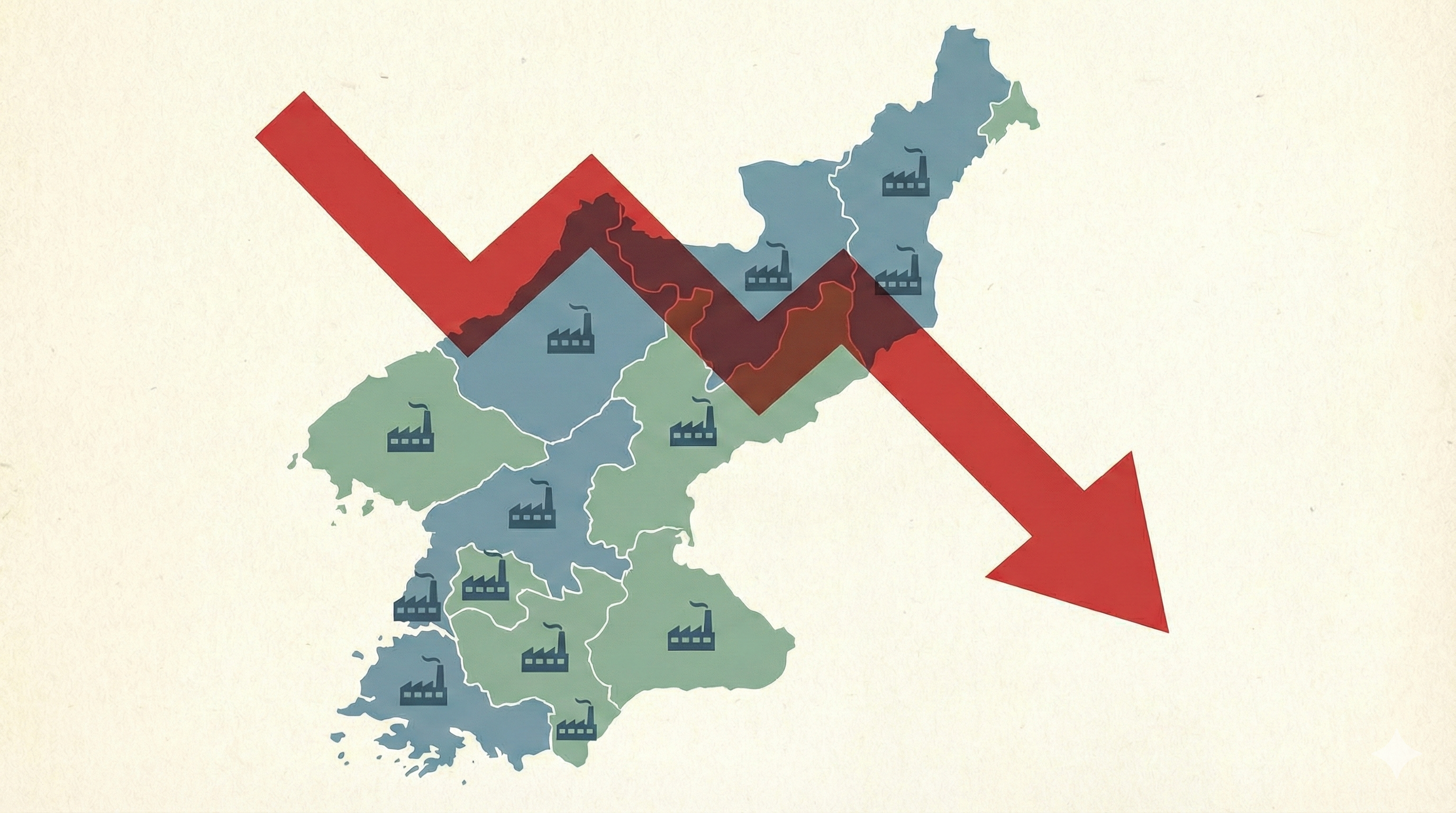
Hanoi and Pyongyang’s economic trajectories demonstrate striking divergence. Vietnam’s Đổi Mới reforms, launched in 1986, transformed a centrally planned, low-income country into one of Southeast Asia’s fastest-growing economies, integrated into global supply chains and capable of attracting substantial foreign direct investment (FDI). North Korea, by contrast, remains constrained by extensive sanctions, relative economic isolation, and reliance on illicit forms of trade. Vietnam managed to avoid regime collapse while adapting its economic system and international affairs, illustrating how a socialist party-state can pursue market-oriented development while maintaining administrative control.
South Korea is Vietnam’s largest source of FDI, playing a significant role in the export-driven growth of Vietnam’s GDP; Samsung alone accounts for over 10 percent of Vietnam’s exports (Guarascio, 2025). The economic benefits Hanoi derives from relations with the ROK contrasts with the negligible trade it maintains with the DPRK, indicating that Vietnam’s engagement with North Korea is shaped less by economic incentives than by political and strategic considerations. Hanoi interacts with Pyongyang to sustain diplomatic ties, enhance its international profile, and signal its autonomy, even in the absence of meaningful economic interdependence.
For Pyongyang, sustained interaction with Hanoi—and study of its reform path—might offer lessons for economic modernization. Kim Jong-un reportedly acknowledged, in a conversation with South Korean President Moon Jae-in, that Vietnam’s experience demonstrates the possibility of maintaining political continuity while pursuing market-oriented policies (Lee and Park, 2018). North Korea’s periodic attempts to establish Special Economic Zones (SEZs) can be understood as exploratory efforts to emulate aspects of China and Vietnam’s economic reform and opening. Kim may find inspiration in a governance style that is flexible when necessary, yet resolute when core regime interests are at stake (Choi, 2025). Vietnam shows that one-party socialist rule need not equate to permanent isolation or economic stagnation.
Yet the suggestion that Vietnam could serve as a model for North Korea is probably overly optimistic. The structural conditions that enabled Vietnam’s Đổi Mới reforms are different for the DPRK. Vietnam realized reunification in 1975, and while it had to overcome internal and external conflicts, corruption and abuses of power, it did not have a single-family personalized regime. North Korea, by contrast, inhabits a divided peninsula with a more successful South Korea. Sanctions against nuclear weapons, ballistic missiles, and human rights abuses limit DPRK trade, and its nuclear arsenal is increasingly associated with regime survival rather than with bargaining for diplomatic normalization and economic modernization. The Kim regime, in its current form, appears to lack the political will to make a strategic decision for reform and opening comparable to Vietnam’s.
Conclusion: Limitations and Opportunities of Vietnam’s Role
Two months before To Lam stood next to Kim Jong-un and high-level representatives from China and Russia as nuclear-capable missiles passed by, Vietnam’s top leader visited Seoul as the first state guest of South Korea’s newly elected president, Lee Jae-myung. Three weeks after the Pyongyang parade, a high-level Vietnamese delegation visited South Korea for the APEC Summit. In early November, Pete Hegseth attended an ASEAN gathering of defense ministers and continued on to Hanoi to meet To Lam. In line with the U.S.-Vietnam “comprehensive strategic partnership,” Washington and Hanoi advanced cooperation in defense trade and maritime security (Strangio, 2025), and Hegseth expressed support for Vietnam’s “commitment to defend its sovereignty and regional security” (Guarascio and Nguyen, 2025).
Vietnam’s trade with South Korea has increased exponentially compared to its trade with North Korea, and Hanoi and Seoul have more expansive investment and people-to-people ties (Chung, 2022). Vietnam is not part of a socialist bloc aligned with Pyongyang, Moscow, and Beijing. Its middle-power role in East Asia may be limited because the Kim regime is currently focused on profiting from Russia’s aggression against Ukraine and maximizing benefits from China. If Donald Trump manages to seal deals with Vladimir Putin on ending the Ukraine war and with Xi Jinping on ending the trade war, Kim will then choose his moment to reengage Washington, perhaps creating an opening for Seoul. South Korea’s mutually beneficial relations with Vietnam show what diplomacy and commerce can achieve. Hanoi might be able to offer good offices for meetings in Southeast Asia, providing a platform for communication but not serving as a formal mediator.
When U.S. foreign policy is viewed from Pyongyang, at least three national cases provide ominous analogies. Iraq bluffed about its WMD capabilities and the Saddam Hussein regime was toppled by an invasion led by the George W. Bush administration. Libya agreed to abandon its nuclear ambitions but Muammar Gaddafi was deposed and killed during the Barack Obama administration. Iran negotiated a sanctions relief for nuclear freeze deal with the U.S. and other governments, but Trump pulled out of the JCPOA and eventually ordered the bunker-busting bombing of Iranian nuclear sites. When U.S. and South Korean diplomacy with North Korea finally resumes, it would be helpful if more positive historical examples could influence the discussion. Washington and Seoul contributed forces to the opposing side in the Vietnam War but today consider Hanoi a valuable partner. If observers in Pyongyang are willing to look, they will see in Vietnam’s example the success of international economic engagement, diplomatic normalization, and domestic political stability—without nuclear weapons or regime change. ■
References
Choi, Perry. 2025. “The Fourth Chair: Vietnam’s Pyongyang Showing.” 38 North, October 14. https://www.38north.org/2025/10/the-fourth-chair-vietnams-pyongyang-showing/
Chow, Jonathan, and Leif-Eric Easley. 2019. “Renegotiating Pariah State Partnerships: Why Myanmar and North Korea Respond Differently to Chinese Influence.” Contemporary Security Policy 40(4): 502-525. https://www.tandfonline.com/doi/full/10.1080/13523260.2019.1660483
Chung, Esther. 2022. “Friends for Decades – Vietnam, Korea ‘Shelve the Past’ for a Closer Future.” Korea JoongAng Daily, October 24. https://koreajoongangdaily.joins.com/2022/10/24/national/diplomacy/korea-vietnam-trade/20221024170720933.html
Chung, Yeong-gyo. 2025. “North’s Military Parade Takes on New Meaning as Chinese, Russian Heavyweights Descend on Pyongyang.” Korea JoongAng Daily, October 8. https://koreajoongangdaily.joins.com/news/2025-10-08/national/northKorea/Norths-military-parade-takes-on-new-meaning-as-Chinese-Russian-heavyweights-descend-on-Pyongyang-/2415948
Easley, Leif-Eric. 2012. “Middle Power National Identity? South Korea and Vietnam in U.S.-China Geopolitics.” Pacific Focus 27(3): 421-442. December 6. https://doi.org/10.1111/j.1976-5118.2012.01090.x
Easley, Leif-Eric. 2025. “Theories of China-North Korea Relations Applied to Geopolitics with Russia.” Global NK, April 8. https://www.globalnk.org/publication/view.php?cd=COM000176&ctype=1
Goscha, Christopher. 2012. Historical Dictionary of the Indochina War (1945-1954): An International and Interdisciplinary Approach. Honolulu: University of Hawai’i Press.
Guarascio, Francesco, and Phuong Nguyen. 2025. “Pentagon Chief says U.S. Seeks Deeper Military Ties with Vietnam.” Reuters, November 2. https://www.reuters.com/world/asia-pacific/pentagon-chief-says-us-seeks-deeper-military-ties-with-vietnam-2025-11-02/
Guarascio, Francesco. 2025. “Vietnam’s Plan to Ease High-Tech Subsidies Worries South Korean Investors.” Reuters, November 13. https://www.reuters.com/world/asia-pacific/vietnams-plan-ease-high-tech-subsidies-worries-south-korean-investors-2025-11-13/
Han, Jin-myung. 2025. Former North Korean diplomat’s response to a question posed by the author during his Academy of Korean Studies Societas Koreana Lecture, Seoul, October 24.
Huynh, Tam Sang. 2022. “Vietnam’s ‘Four No’s’ of Defence Policy Are Being Tested.” The Interpreter, April 26. https://www.lowyinstitute.org/the-interpreter/vietnam-s-four-no-s-defence-policy-are-being-tested
Kim Anh. 2025. “Viet Nam, DPRK Sign Cooperation Agreements.” Vietnam News, October 10. https://en.baochinhphu.vn/viet-nam-dprk-sign-cooperation-agreements-111251010210534102.htm
Lee, Jin-myung, and Eui-myung Park. 2018. “김정은, 도보다리서 ‘베트남 모델’ 말했다 (Kim Jong-un Mentioned ‘Vietnam Model’ During Footbridge Conversation).” Maeil Business Daily. May 3. https://www.mk.co.kr/news/politics/8298266
Lintner, Bertil. 2018. “North Korea Eludes Coal Export Ban via Vietnam.” Asia Times, February 8. https://asiatimes.com/2018/02/north-korea-eludes-coal-export-ban-via-vietnam/
Miyamoto, Satoru. 2024. “North Korea and the Vietnam War: Air Force Deployment and Post-War Implications.” Roles Review 5(2): 11-36. https://roles.rcast.u-tokyo.ac.jp/uploads/body_pdf/file/23/2_Satoru_MIYAMOTO.pdf
Park, Ju-min. 2025. “North Korea Says Its Nuclear Weapons State Is Irreversible.” Reuters, September 15. https://www.reuters.com/world/asia-pacific/north-korea-says-its-nuclear-weapons-state-is-irreversible-2025-09-14/
Strangio, Sebastian. 2025. “US, Vietnam Discuss Deeper Defense Cooperation, Possible Arms Sales.” The Diplomat, November 3. https://thediplomat.com/2025/11/us-vietnam-discuss-deeper-defense-cooperation-possible-arms-sales/
Szalontai, Balázs. 2005. Kim Il Sung in the Khrushchev Era: Soviet-DPRK Relations and the Roots of North Korean Despotism, 1953-1964. Stanford University Press.
Tran, Quang Minh, and Thi Tham Nguyen. 2016. “Vietnam-North Korea Relations: Some Remarks over the Last 65 Years and Prospects.” Dong-A Research Journal 35(2): 353-379. https://dspace.kci.go.kr/handle/kci/1017094
Vu, Khang. 2025. “Vietnam Is Courting North Korea – and Still Winning Western Friends.” The Interpreter, October 8. https://www.lowyinstitute.org/the-interpreter/vietnam-courting-north-korea-still-winning-western-friends
Westad, Odd Arne. 2005. The Global Cold War: Third World Interventions and the Making of Our Times. Cambridge University Press. https://www.cambridge.org/core/books/global-cold-war/75870878657DC67E0BC70FA7D2388494
Young, Benjamin. 2019. “The Origins of North Korea-Vietnam Solidarity.” Woodrow Wilson International Center for Scholars, Working Paper no. 7. February. https://www.wilsoncenter.org/sites/default/files/media/documents/publication/nkidp_working_paper_7_benjamin_young_north_korea_vietnam_war_february_2019.pdf
■ Leif-Eric EASLEY (Ph.D. in Government, Harvard University) is Professor at Ewha Womans University in Seoul where he teaches international security and political economics. He appreciates excellent research assistance from Aisaule Mereke.
■ Edited by Sangjun LEE, EAI Research Associate
For inquiries: 02 2277 1683 (ext. 211) | leesj@eai.or.kr